A River Runs Beneath
Indigenous Augmented reality projects from the Circumpolar World to Ubmeje/ Umeå
June 16-18, 2026
Umeå, Sweden
Arctic Arts Summit 2026
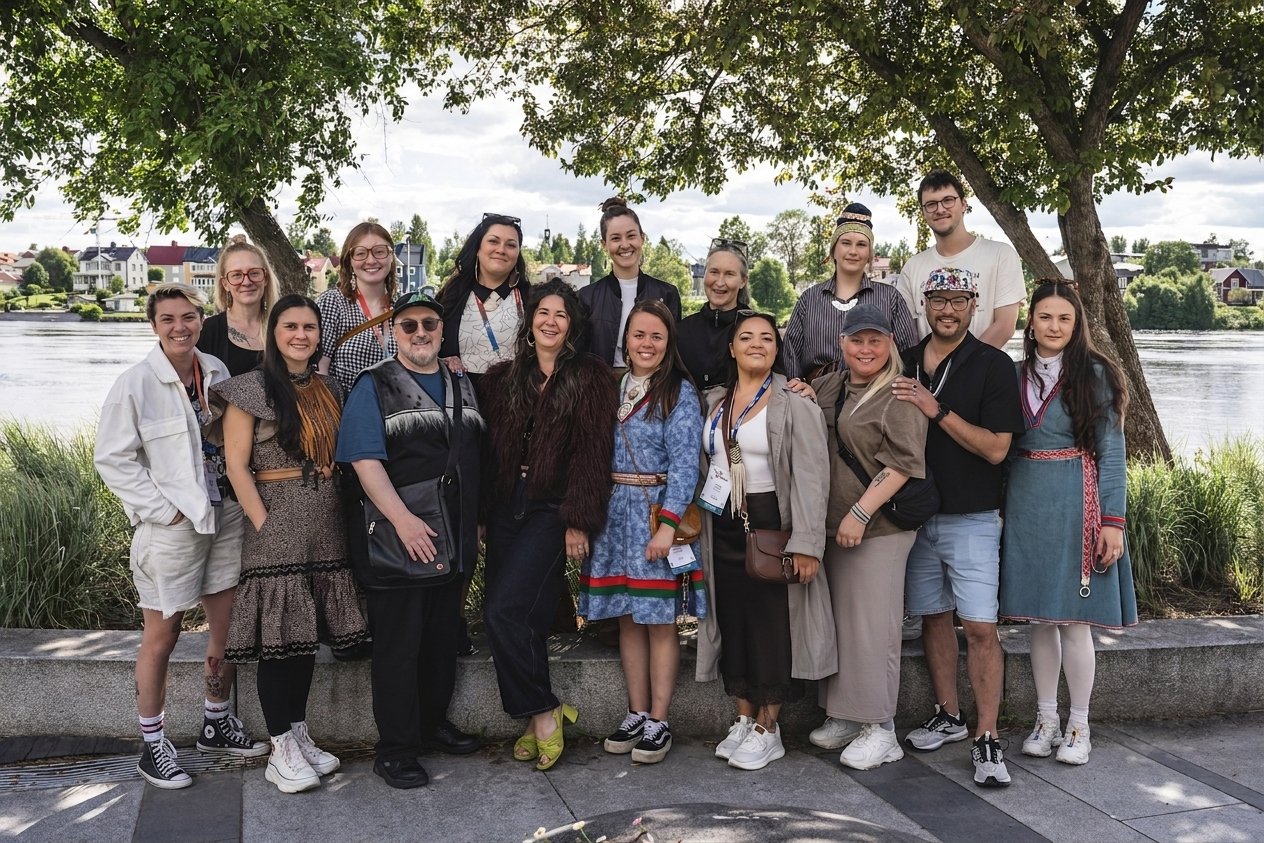
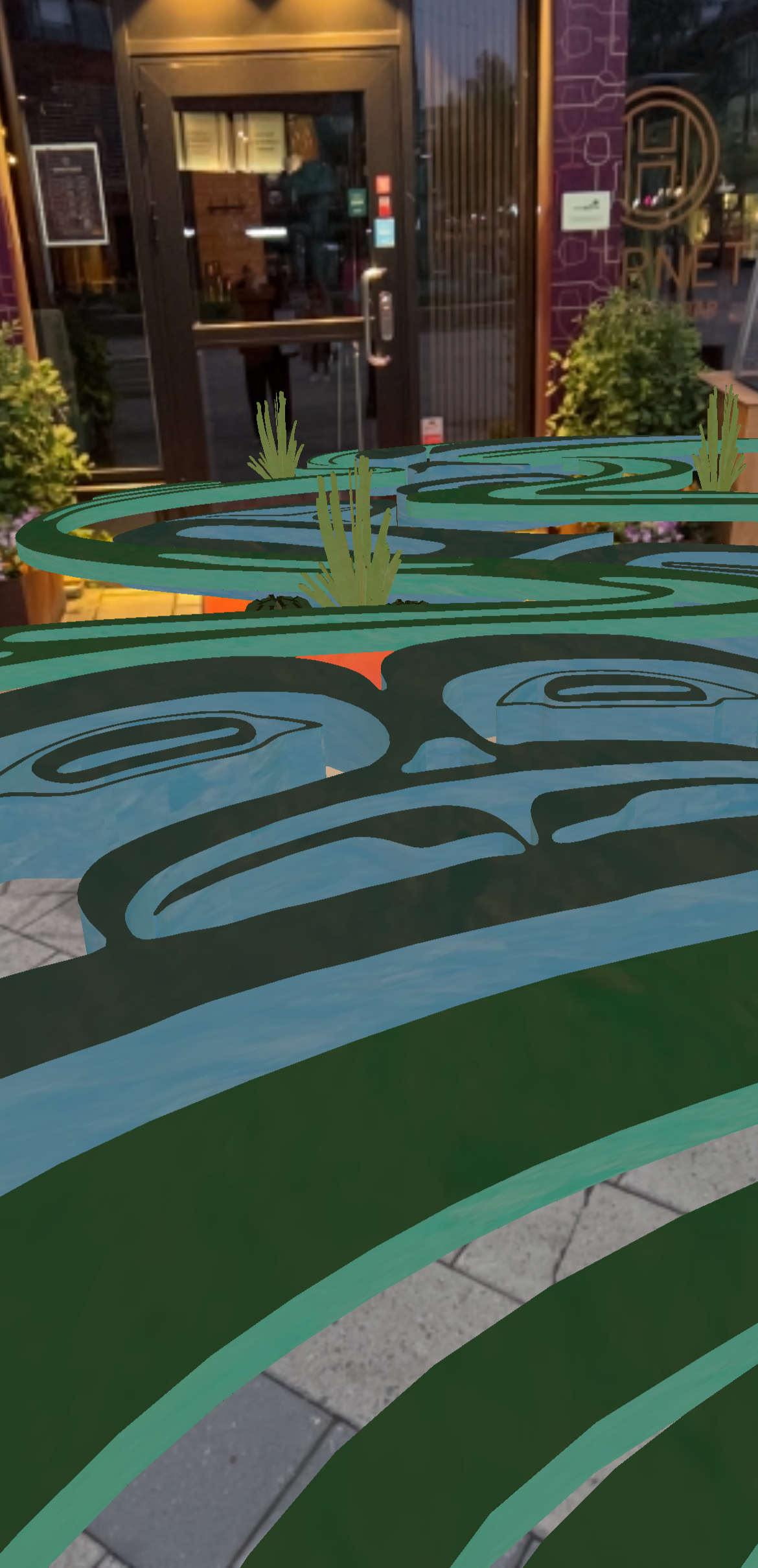
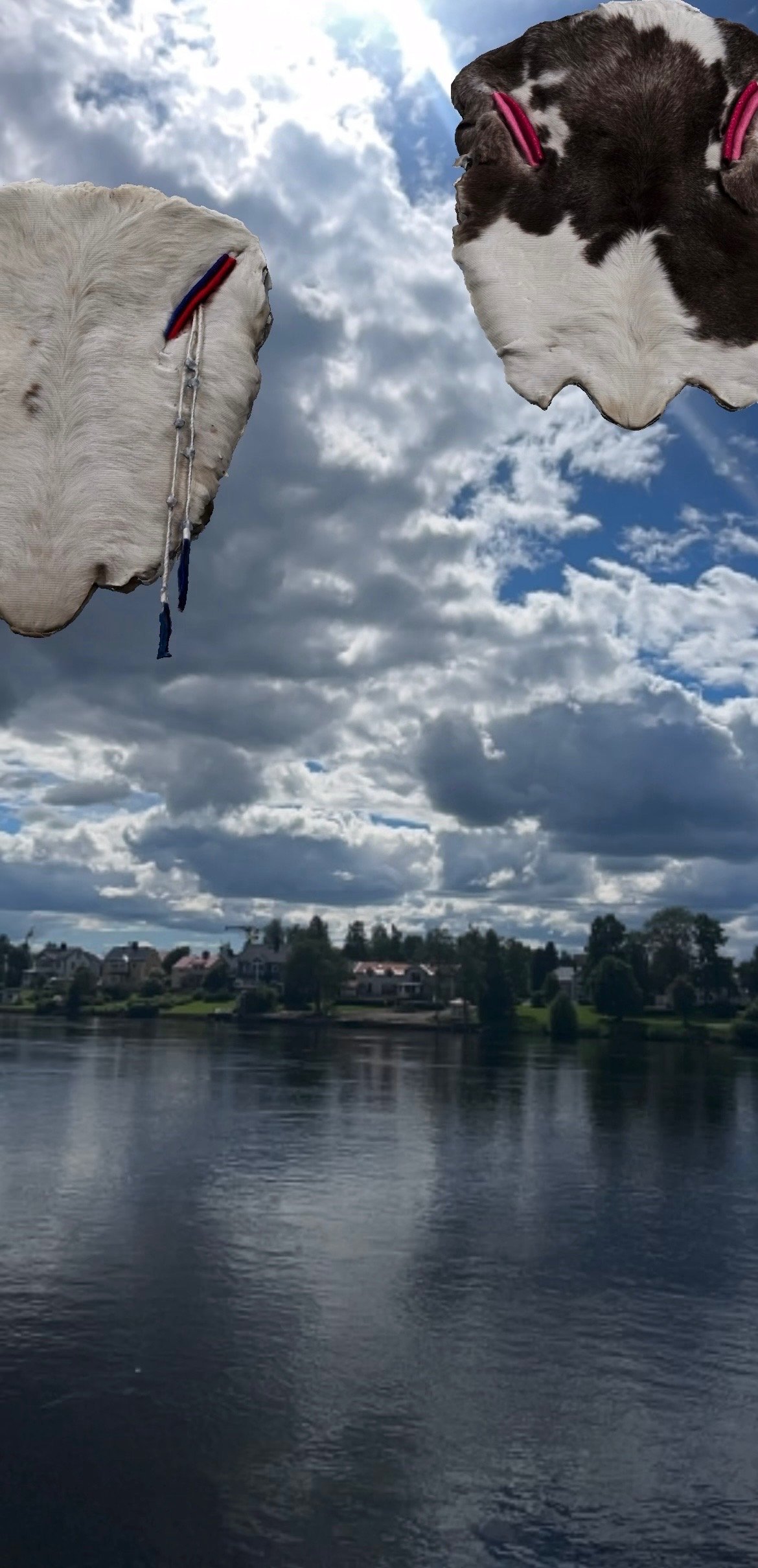
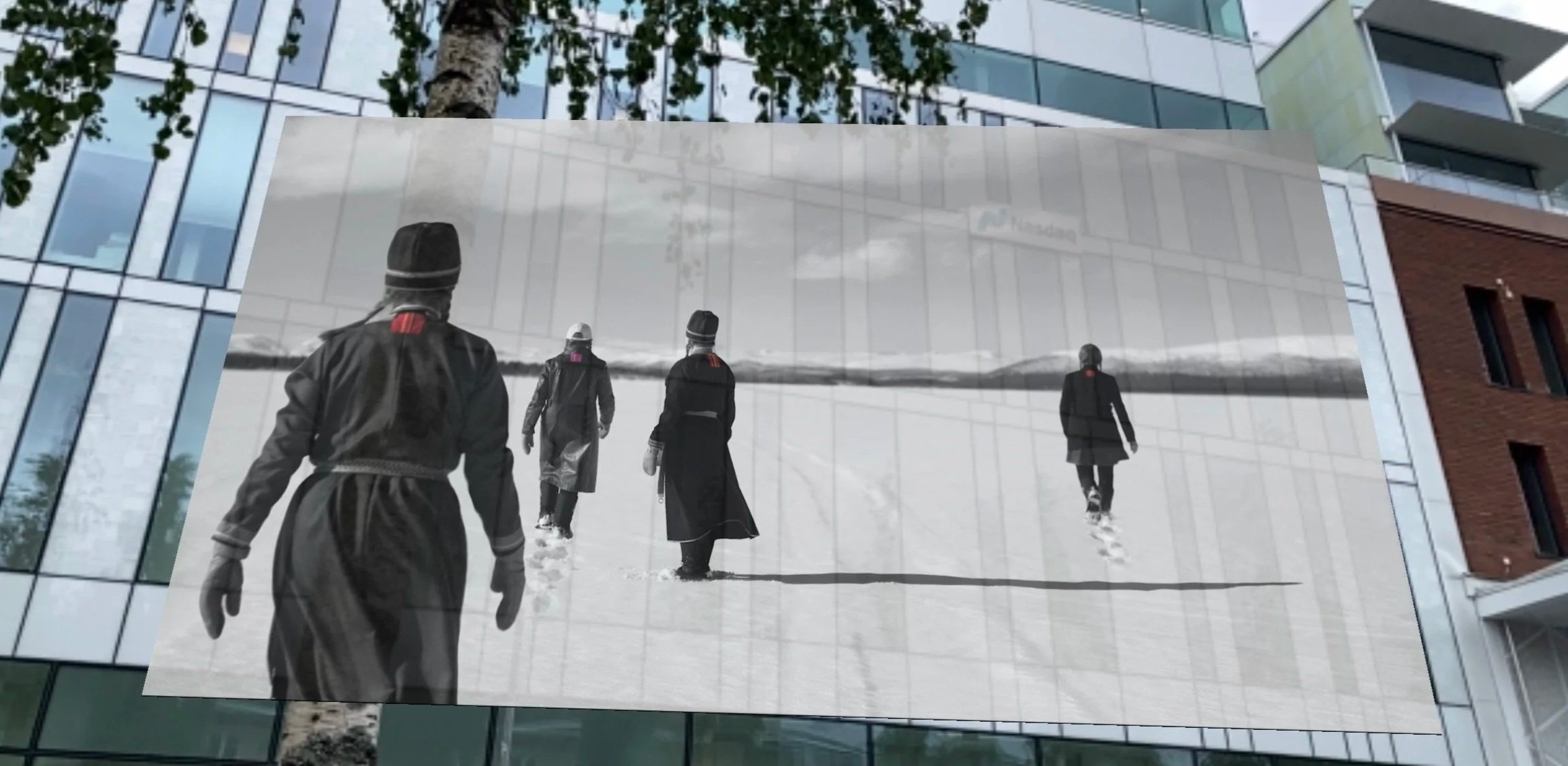
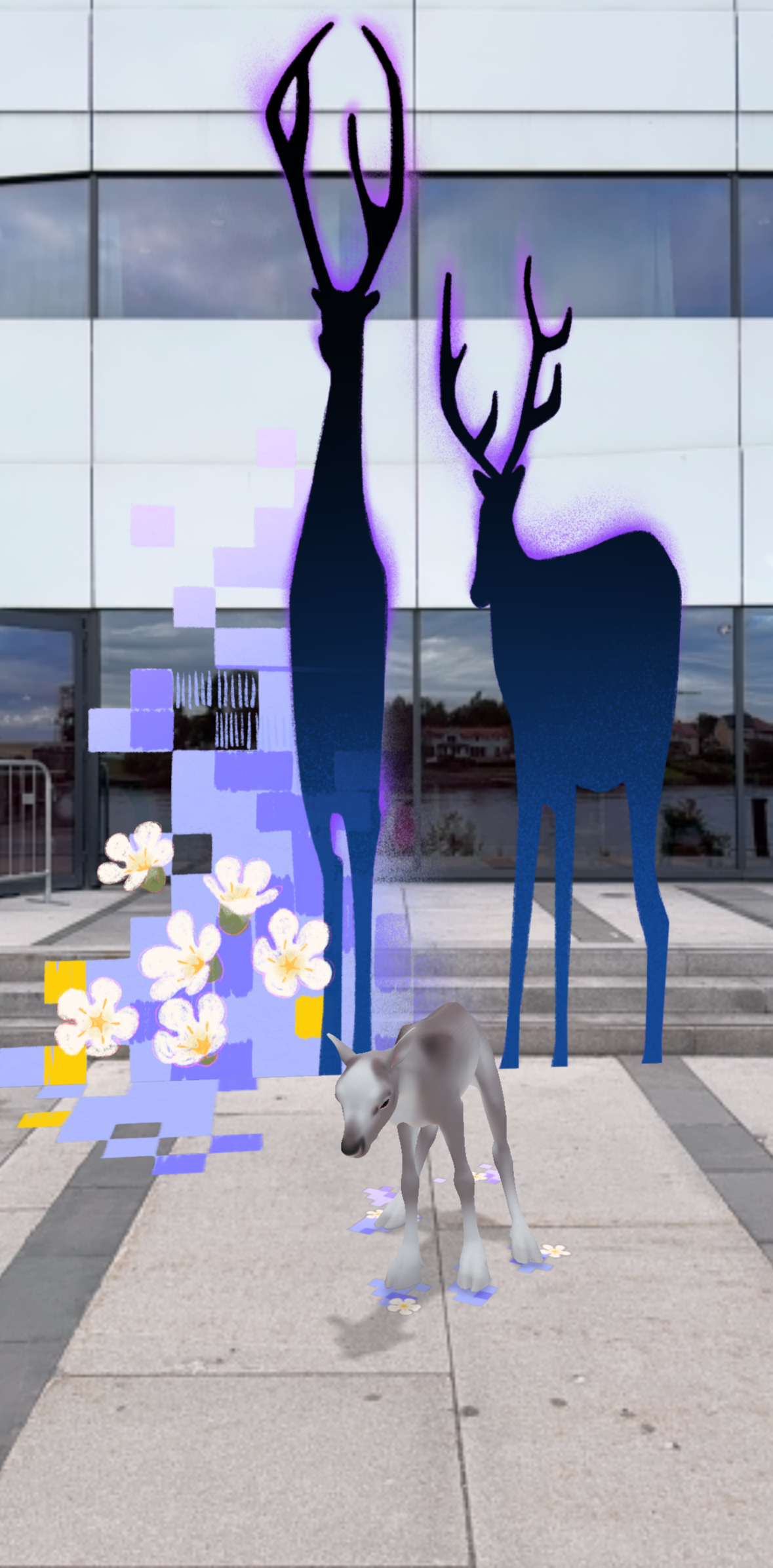
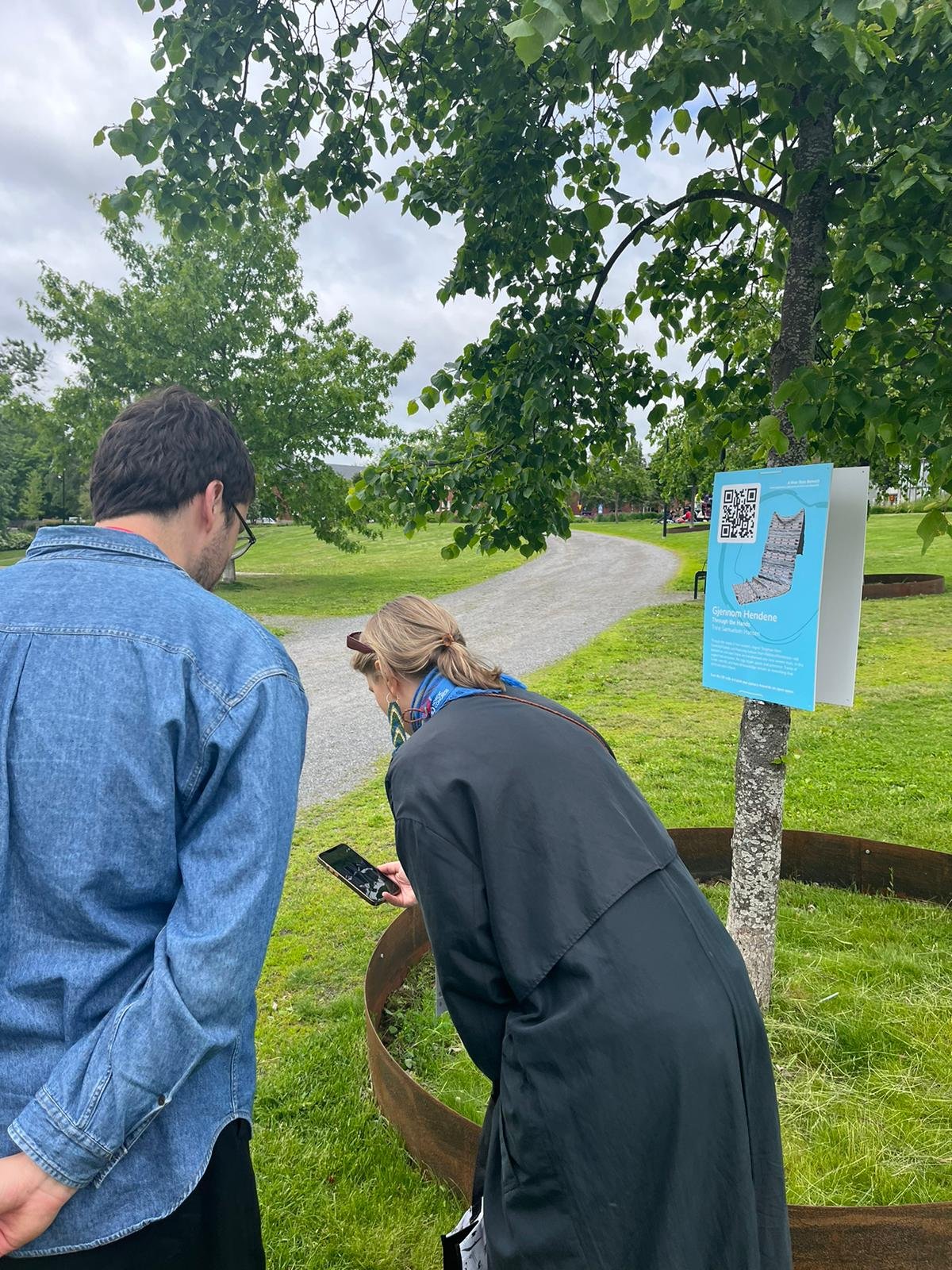
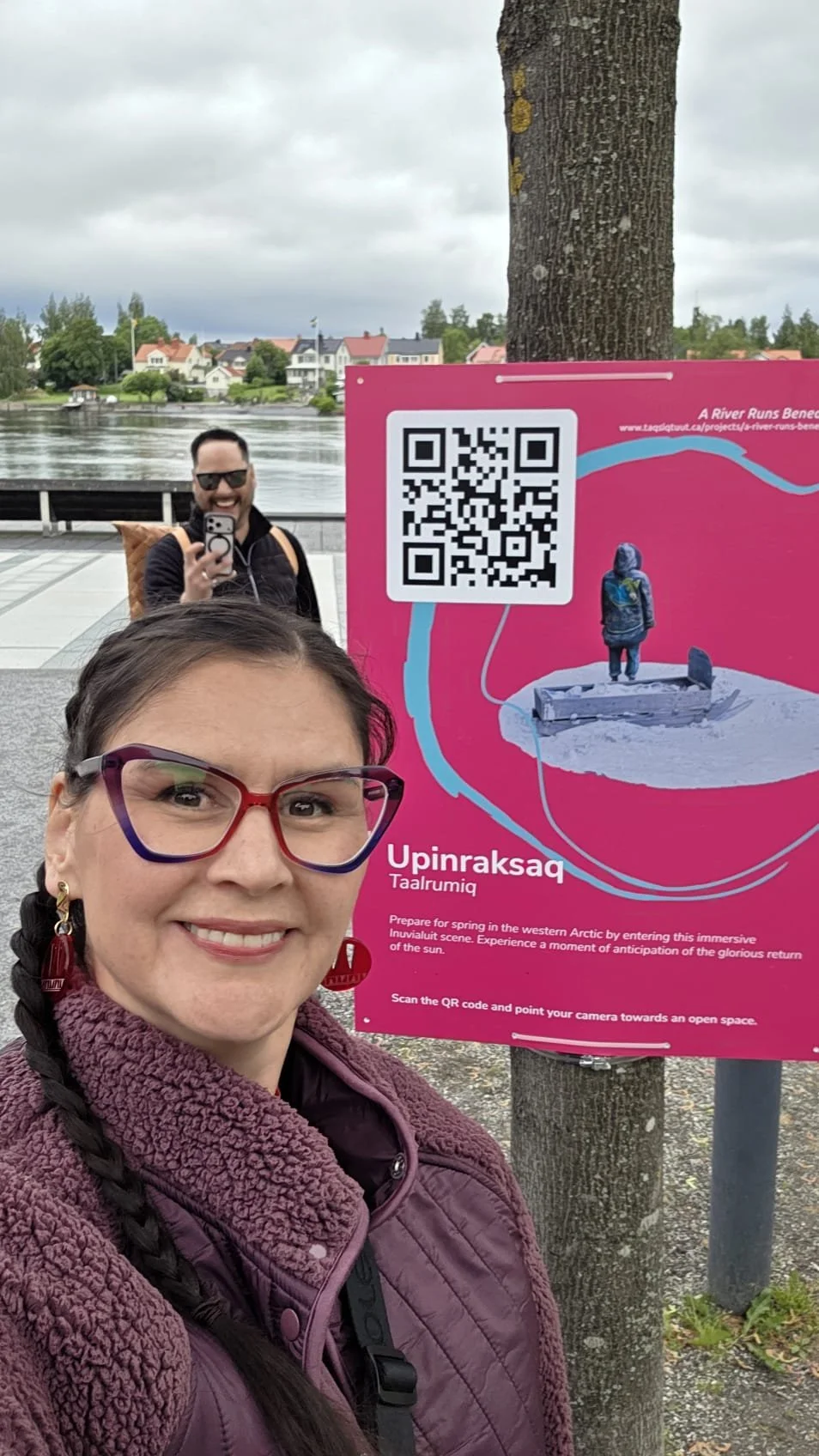
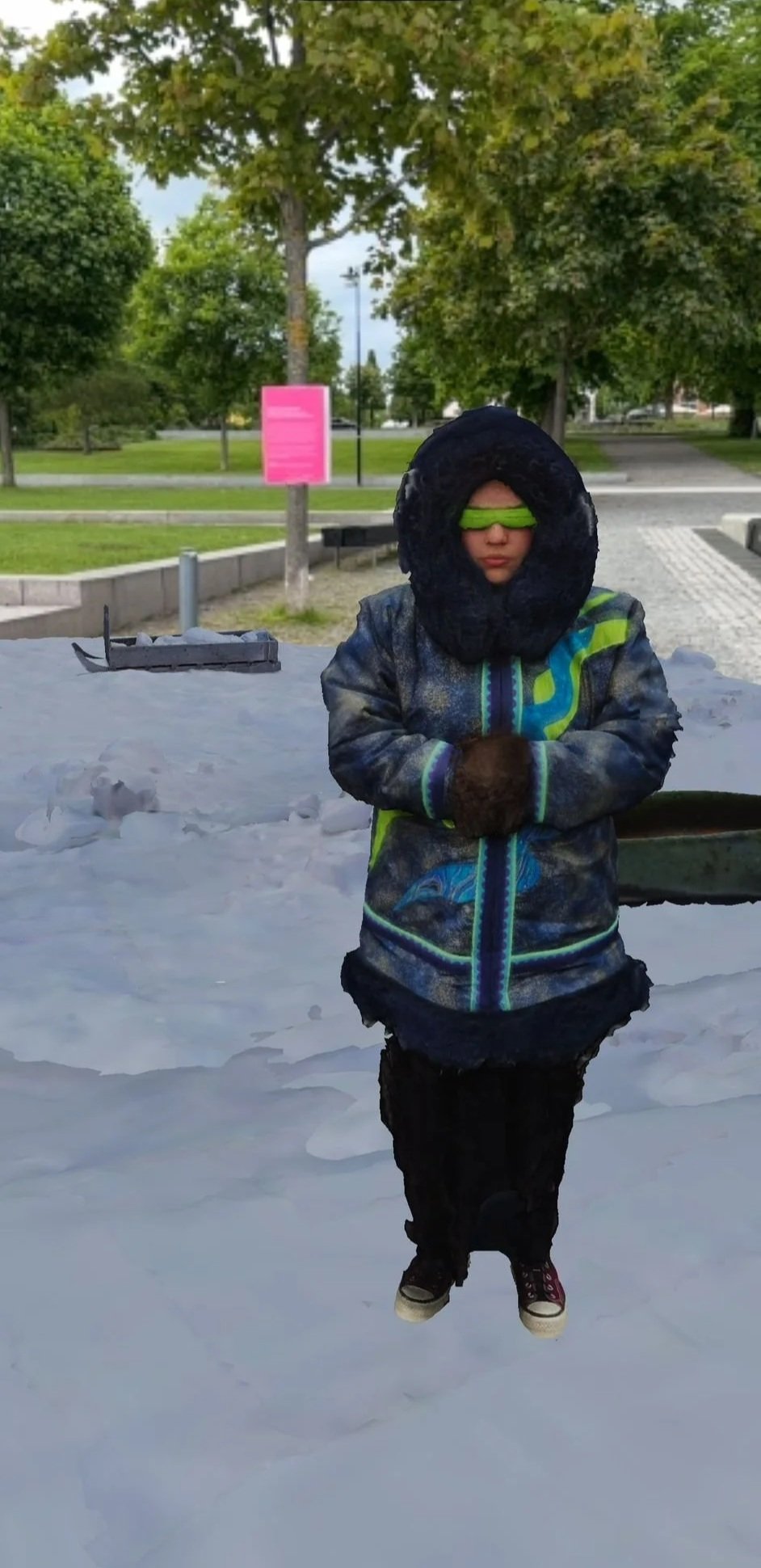
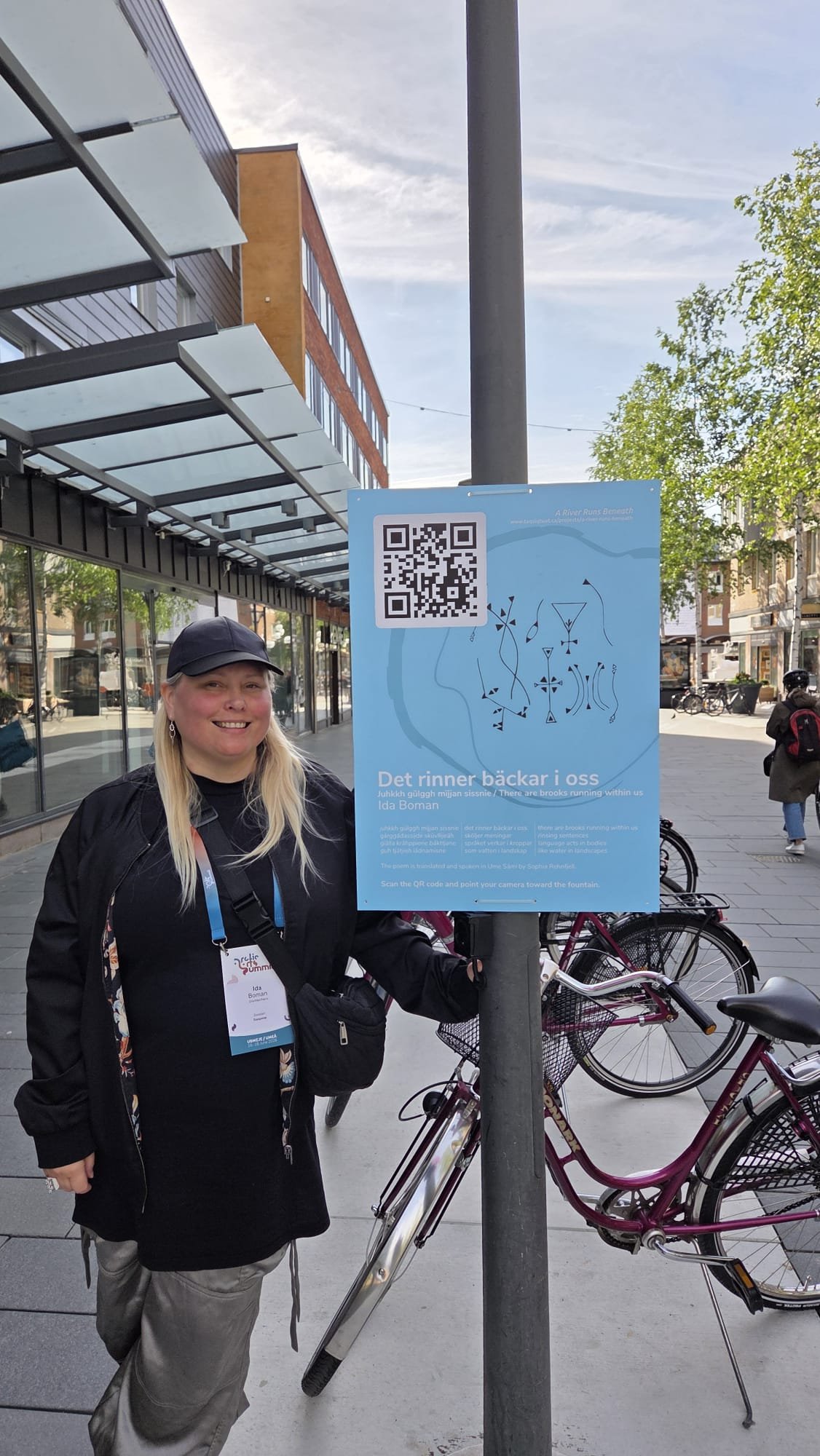
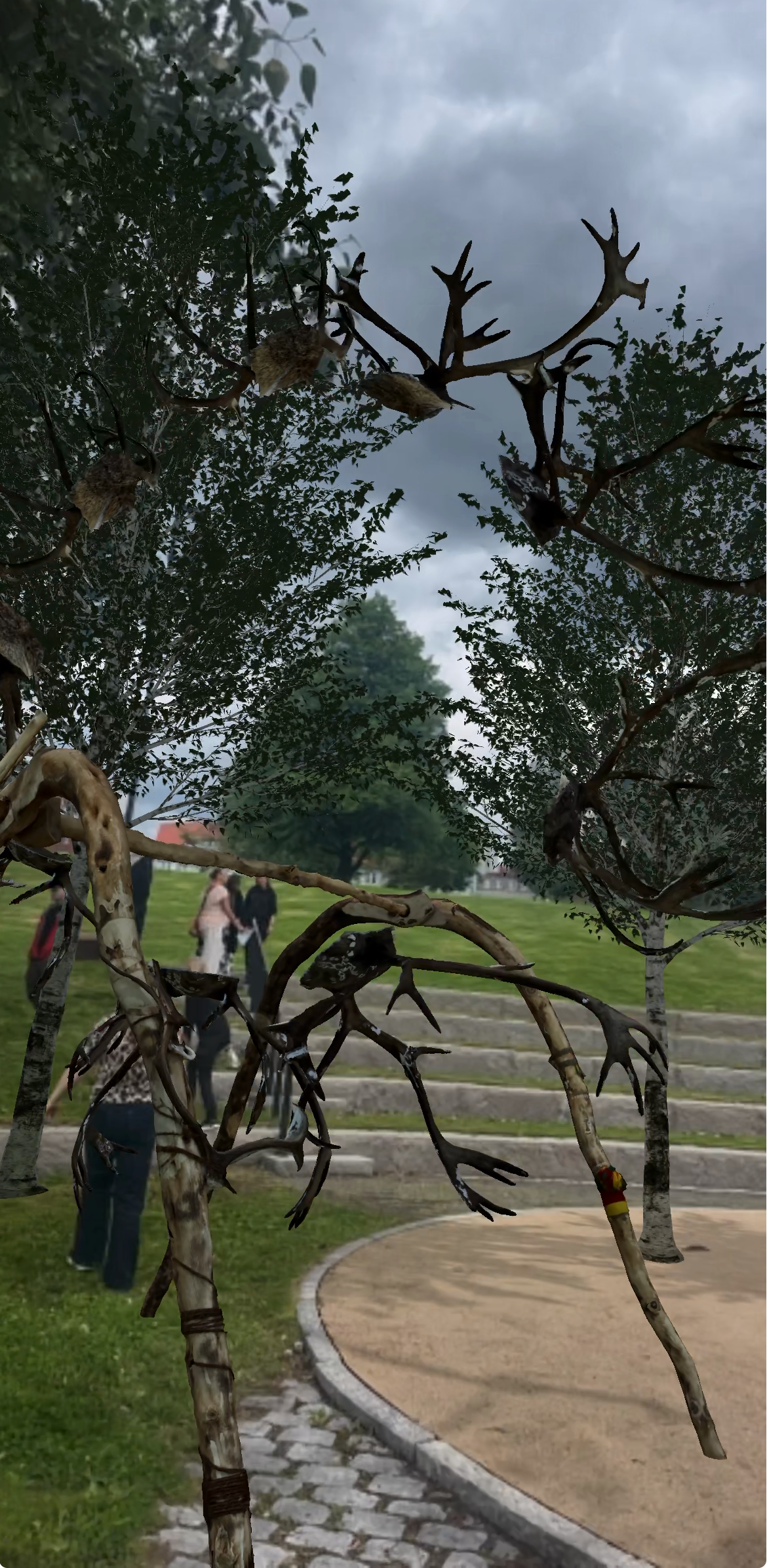
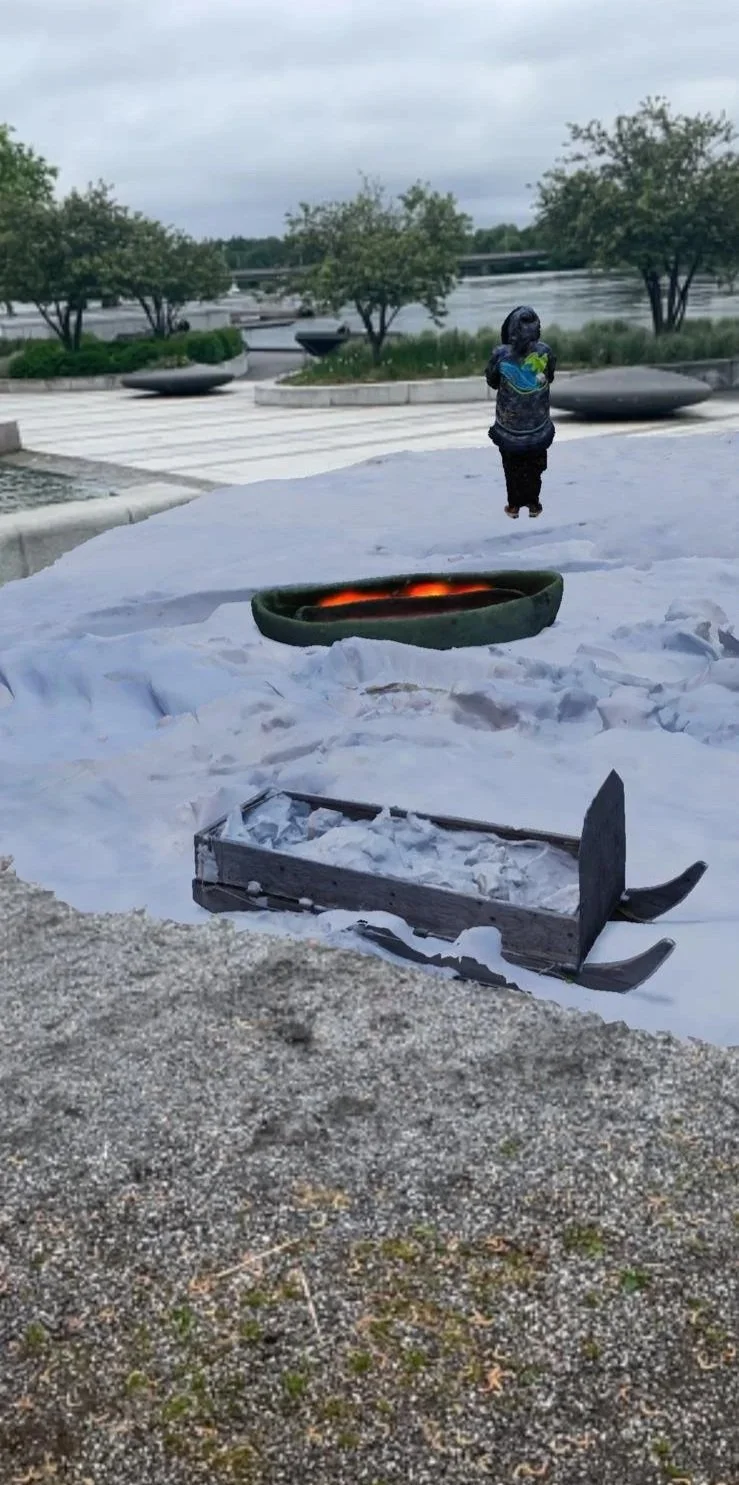
A River Runs Beneath is a Northern international Augmented Reality project created to debut at the Summit and specifically Ubmeje/ Umeå. Titled in reference to the river running beneath the city centre, the artists in this exhibition contribute works that think through confluences, movement, shared histories, place-making, site-specificity, language, land and waterways. Local and visiting artists from Inuit Nunaat and Sapmi invite Summit attendees to seek out the AR project’s QR codes throughout the city and be the first to experience these thoughtful, fun, and dynamic works in person before they are shared with the world. Visit camp or hit up a disco, dress up in Arctic fashion, and experience language and culture like you never have before.
To create these original works for the Summit, Indigenous artists from across the North and working in all media came together for artistic incubator residencies in Canada and Sweden in 2025 and 2026. Post your AR selfies with the hashtag #AAS_ARiver and we’ll feature them on our digital platforms.
A River Runs Beneath was curated by Dr. Heather Igloliorte (Inuk) and Maria Svonni (Sámi). Digital artist Jordan Hill (T’Sou-ke Nation) was the project mentor. The graphic design was done by Edie Skeard.
Featured Artists
-
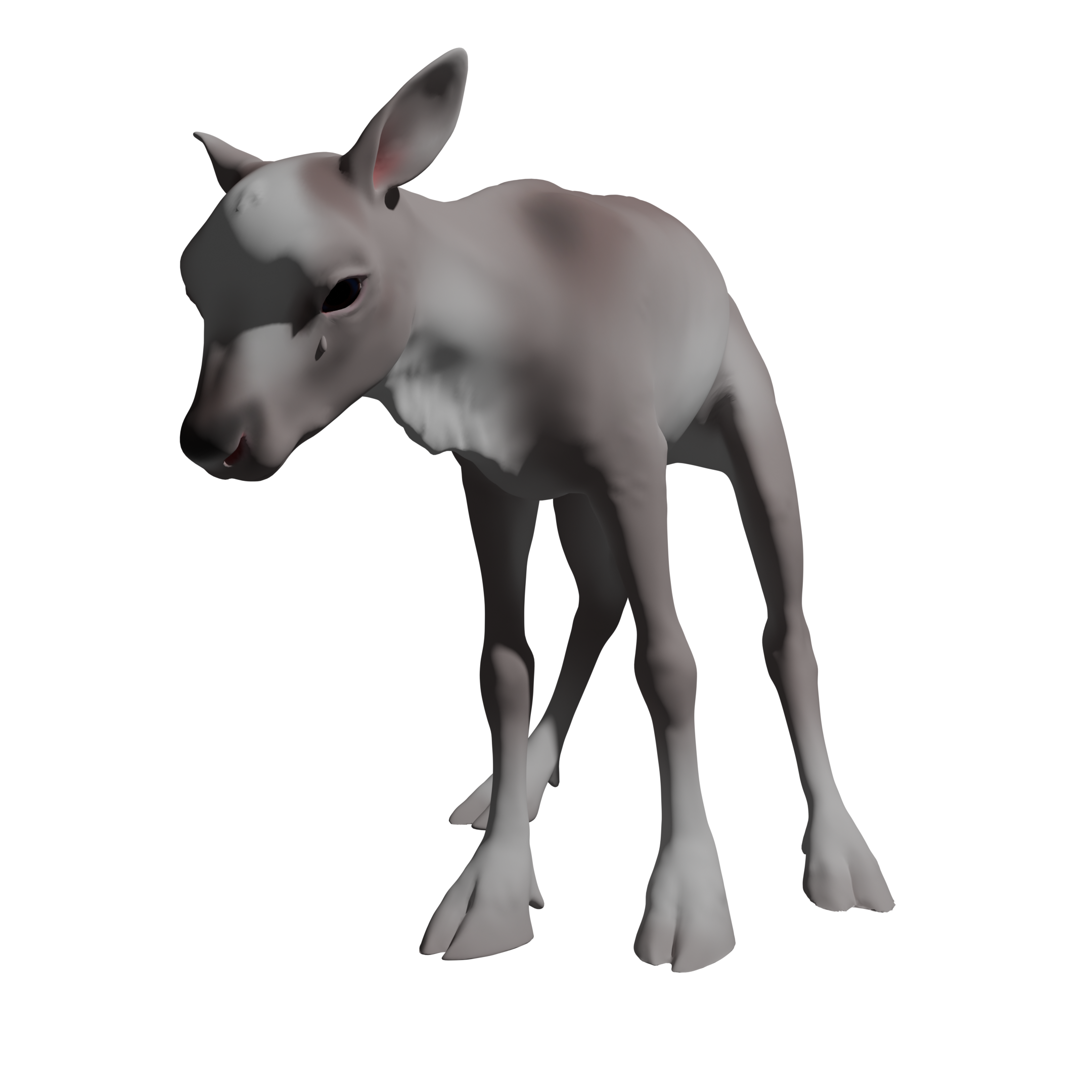
Coco Apunnguaq Lynge is a multidisciplinary artist working across art and design (graphic, character concept, fashion, and book illustration). Born in Greenland and raised in Denmark, Coco was compelled to access her Greenlandic roots throughout her life—a longing that resonates deeply in her creative practice. Her personal work is inspired by exploring the cultural richness of Inuit heritage and identity that offers a strong visual connection to her cultural background.
Coco is a graduate of The Animation Workshop in Denmark and has continued her studies in multimedia and fashion design. Coco's work has gained international visibility, with her illustrations featured in books published in Denmark, Greenland, Iceland, France, and Canada. Her talent in character design has also led her to collaborate on several AAA video games and illustrate for board games.
-
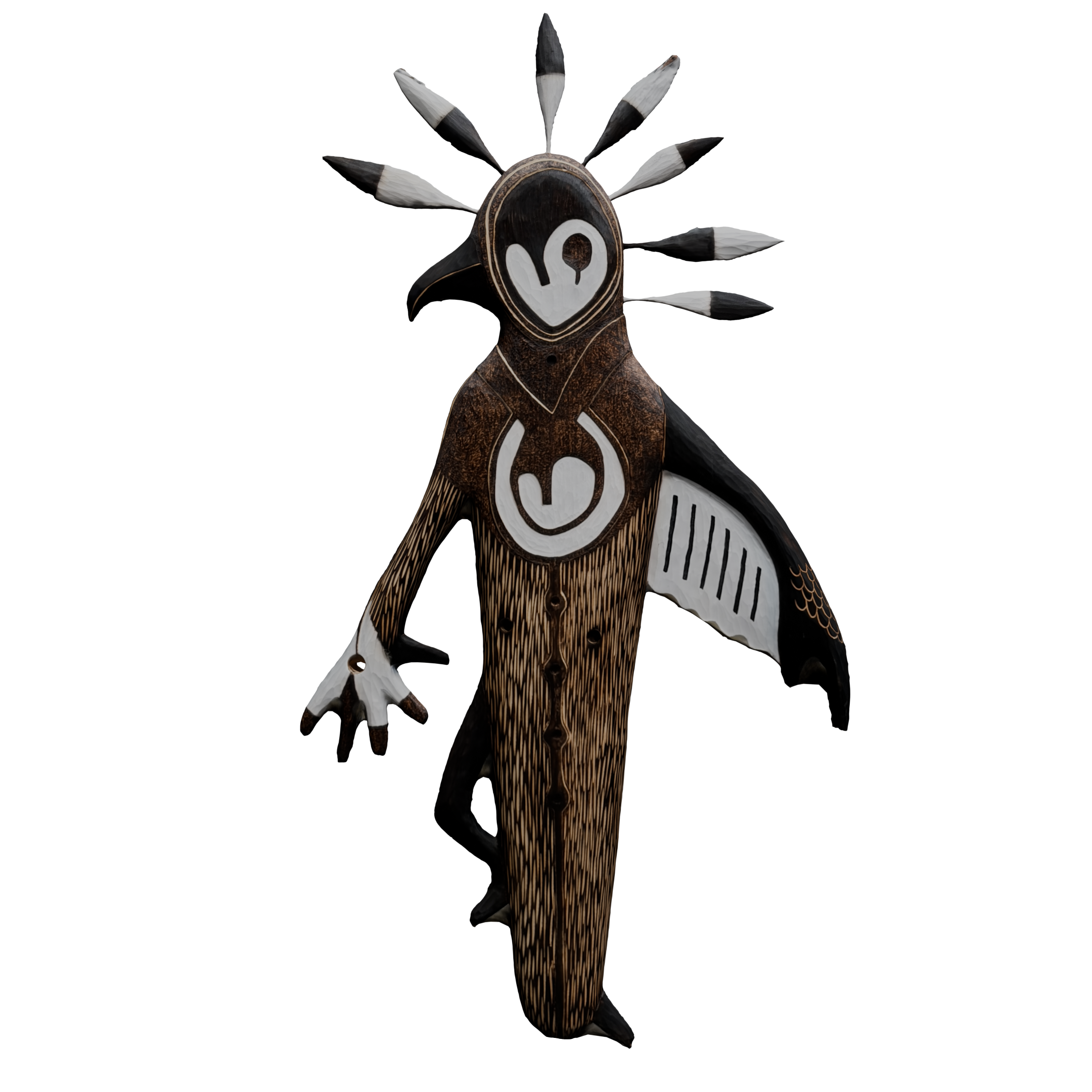
Drew Michael (Yup’ik and Inupiaq) was born in Bethel, Alaska. He and his twin brother grew up in Eagle River, Alaska.
Drew started learning carving at age 13, learning from archeologist Bob Shaw, printmaker Joe Senungetuk, and contemporary Athabascan mask-maker, Kathleen Carlo. As Drew practiced his craft and developed his own style, he also studied the craftsmanship of works by master carvers and spent many hours comparing others works with his own designs and process, searching for his own niche. He applied research to his carvings, using trial & error to grow his work into what it is today.
Drew focuses on how masks were originally used by Yup’ik people, for healing and telling stories of things unseen. Drew's work incorporates healing practices of the Yup’ik people and religious icons of European Christianity. The artist hopes to encourage people to find healing in ways that bring about balance in much the same way he has used these practices to find balance in his own life.
-
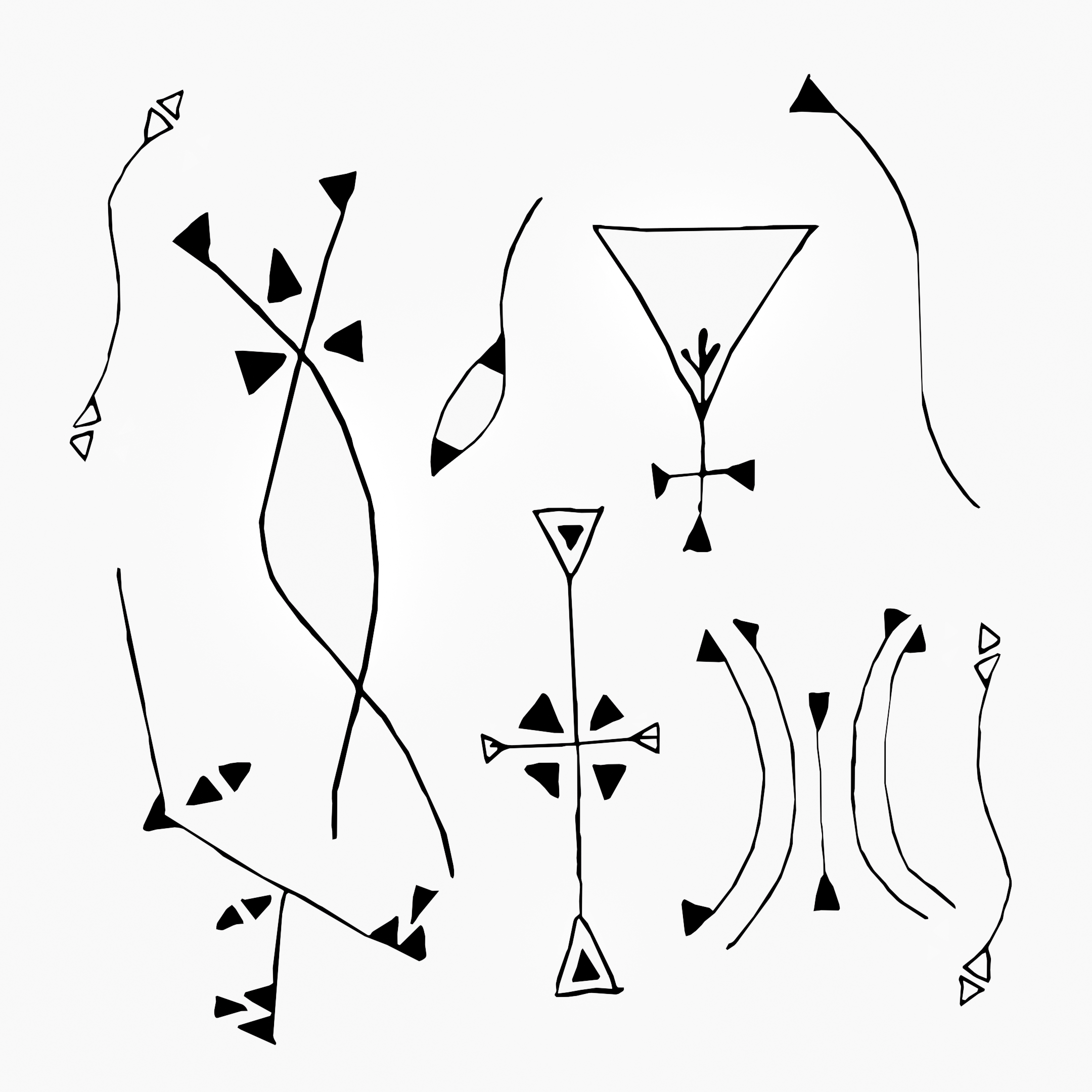
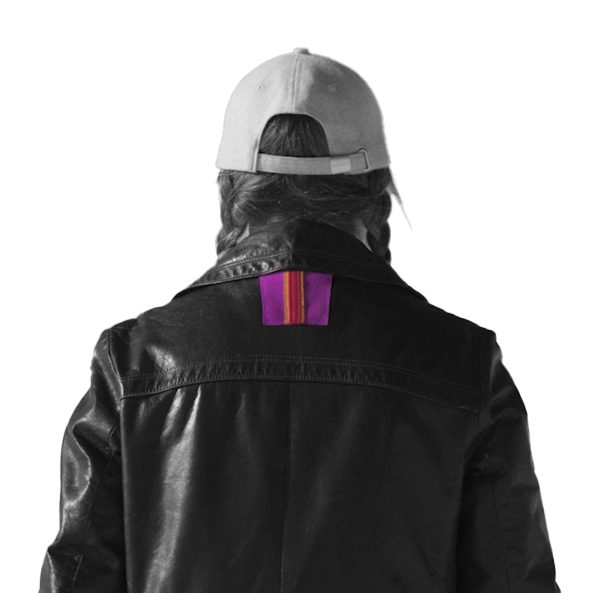
Ida Boman (b. 1981, Umeå, Sweden) is an active artist in Västerbotten with both South Sami roots and heritage from the Swedish southern regions of Småland and Blekinge. She has a bachelor's degree and master's degree of Fine Arts and a bachelor's degree of International Conflict and Crisis Management from Umeå University. She also has academic education in Creative Writing, Feminist Theory and History.
Recent years Ida Boman had solo exhibitions at Konsthall Väst på fjället, Bjurholm 2024 and Galleri Alva, Umeå 2025, and she has participated in a number of group exhibitions, including at Bildmuseet, Umeå 2024, Västerbottens Museum, Umeå 2022 and Liljevalchs konsthall, Stockholm 2021. She has been awarded the Region Västerbotten scholarship for graduating students at Umeå University’s Academy of Fine Arts and the The Royal Academy of Fine Arts scholarships for art students and young artists. In addition to her artistic practice, Ida Boman has a curatorial practice where she has curated several exhibitions and she has worked as a guest teacher in sculpture and installation at ABF Umeå Art School since 2024. She currently holds a position as a temporary operations manager at the People's Movements for Art Promotion, Konstfrämjandet Västerbotten in Umeå.
-
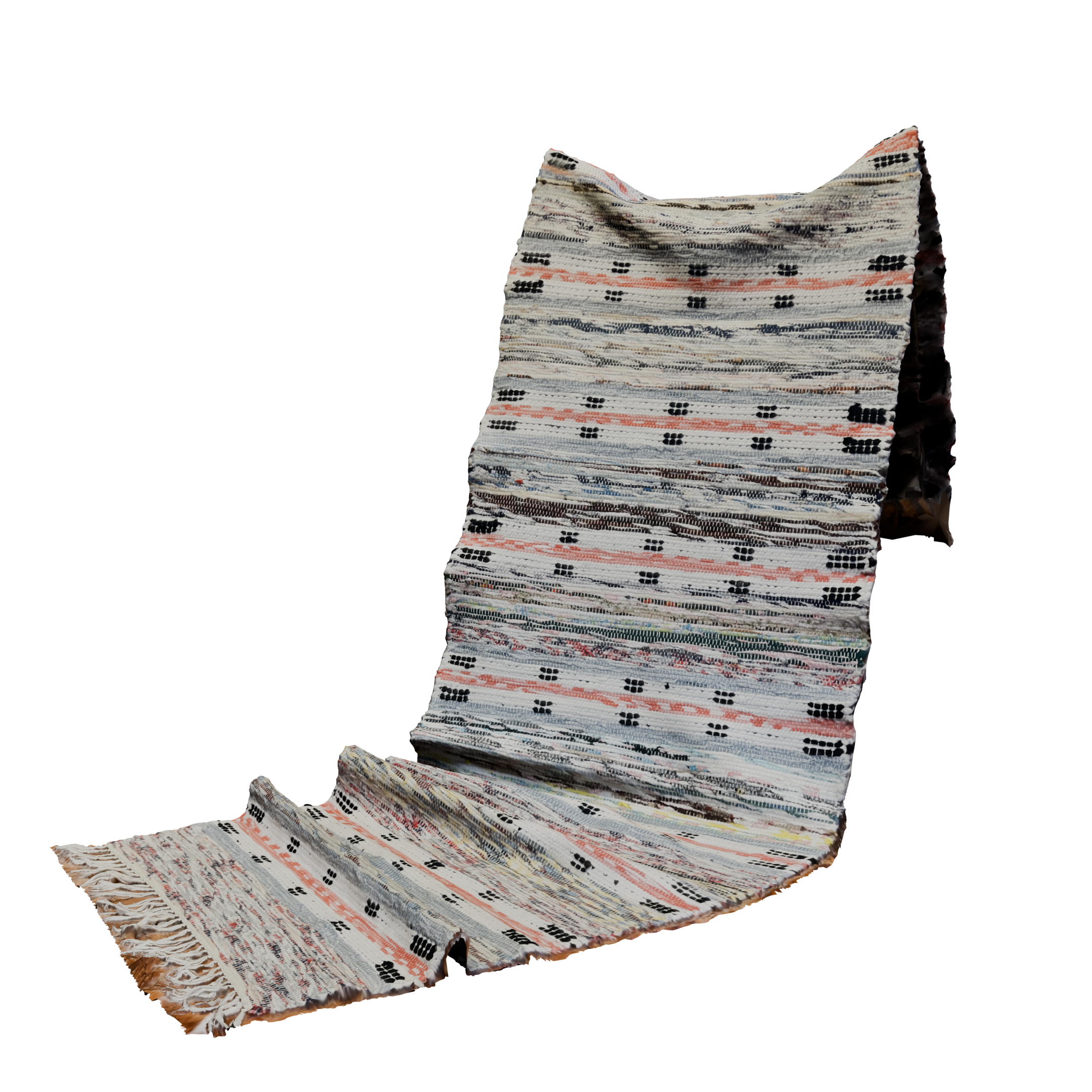
Monica L Edmondson belongs to the Lule sami area of Sábme/Sápmi. The issues she wants to explore in her art work, and the stories she would like to tell, indicate the use of materials and techniques. However, glass is the material she knows best and it is often used to express the coexisting notions of fragility and strength in her people, us humans and our land. Public art work and collaborations with architects are just as important in her practice as hands-on glass work and extensive art projects.
After a visual arts degree from Canberra School of Art Australia (1999) Monica established a glass workshop and studio in Tärnaby north Sweden. Her work is part of national and international art collections, for example at the National Gallery of Australia and Nationalmuseet Stockholm, and have been exhibited at the National Gallery of Canada Ottawa and Koganezaki Glass Museum Shizuoka Japan, amongst others.
-
Trine Samuelsen Hansen is a Norwegian and Sea Sámi architect, artist, and musician from Skiervá in Northern Troms on the Norwegian side of Sápmi. Her interdisciplinary practice moves between architecture, spatial installation, performance, and sound, exploring how Indigenous knowledge, place, and collective memory can shape contemporary artistic and architectural practice.
Rooted in Sea Sámi cultural traditions, Hansen’s work investigates how space can function as a framework for listening, gathering, and dialogue. Central to her practice is the concept of árran—firepace—understood not only as a physical structure but as a social and spiritual centre for conversation, storytelling, and community. Through ritual-based and participatory approaches, she develops spatial situations that invite audiences to engage with questions of belonging and cultural continuity in Sápmi.
Her diploma project Ságastallaárran – A Sea-Sámi Ritual-Based Architecture, developed at the Bergen School of Architecture in 2025, proposes a ceremonial architectural practice grounded in Indigenous methodologies. Presented as a full-scale installation and building manual, the project enables a conversational gathering space to be assembled in different locations, opening possibilities for dialogue across communities and contexts.
Alongside her artistic research, Hansen has worked with the international art triennial Bergen Assembly in both 2022 and 2025, contributing as an exhibition technician, builder, and collaborator on large-scale installations. She has also participated as a singer and joiker in performance and radio works presented at institutions including Bergen Kunsthall.
-
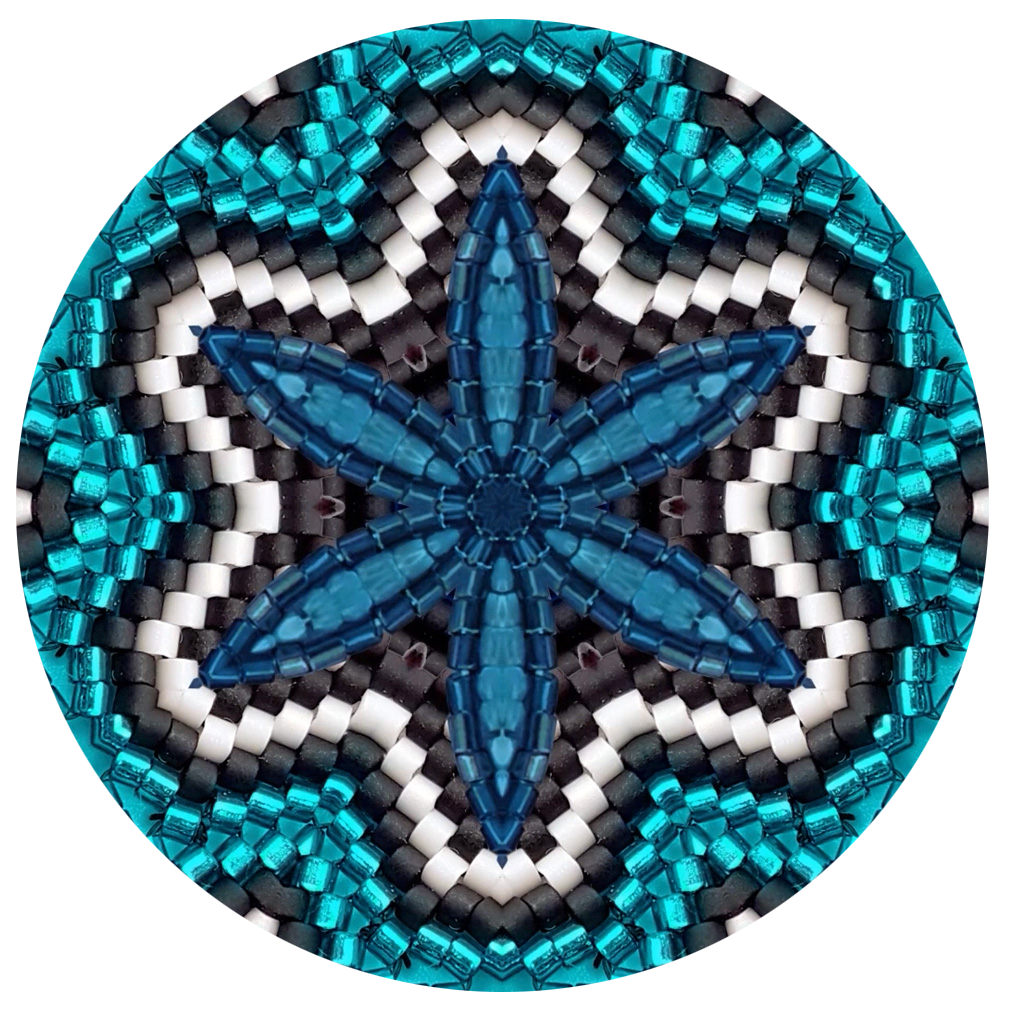
Glenn Gear is an Indigiqueer filmmaker and multidisciplinary artist of Inuit and Newfoundland heritage living in Montréal. He is originally from Corner Brook Newfoundland and has family throughout Nunatsiavut. His research-creation practice is shaped by Inuit ways of learning and knowing – employing a hands-on and tactile approach through animation, video projection, collage, photography, painting, and work with traditional materials such as sealskin and beads. His work often employs a multi-layered approach, combining a materials-based practice with storytelling, archival moments, and embodied experience. Many of his installations create dynamic spaces of audio and visual connection to land, water, and animals; sites that reveal movement, patterns, and life cycles alongside everyday magic. He currently teaches at Queens University in the Film & Media Department and continues to facilitate low-budget, DIY animation workshops with Inuit and Indigenous youth across Canada and abroad. His films have screened throughout Canada and around the world.
-
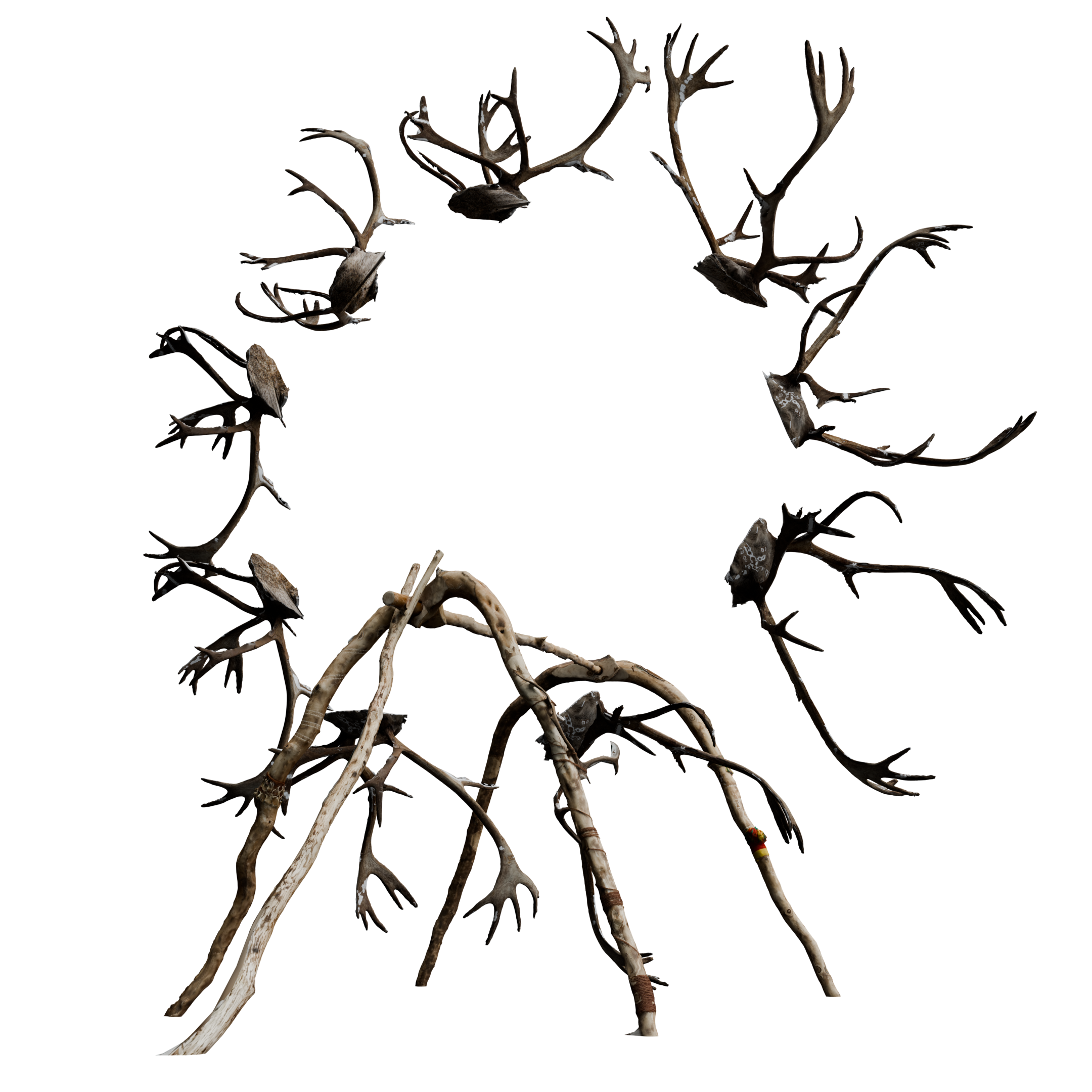
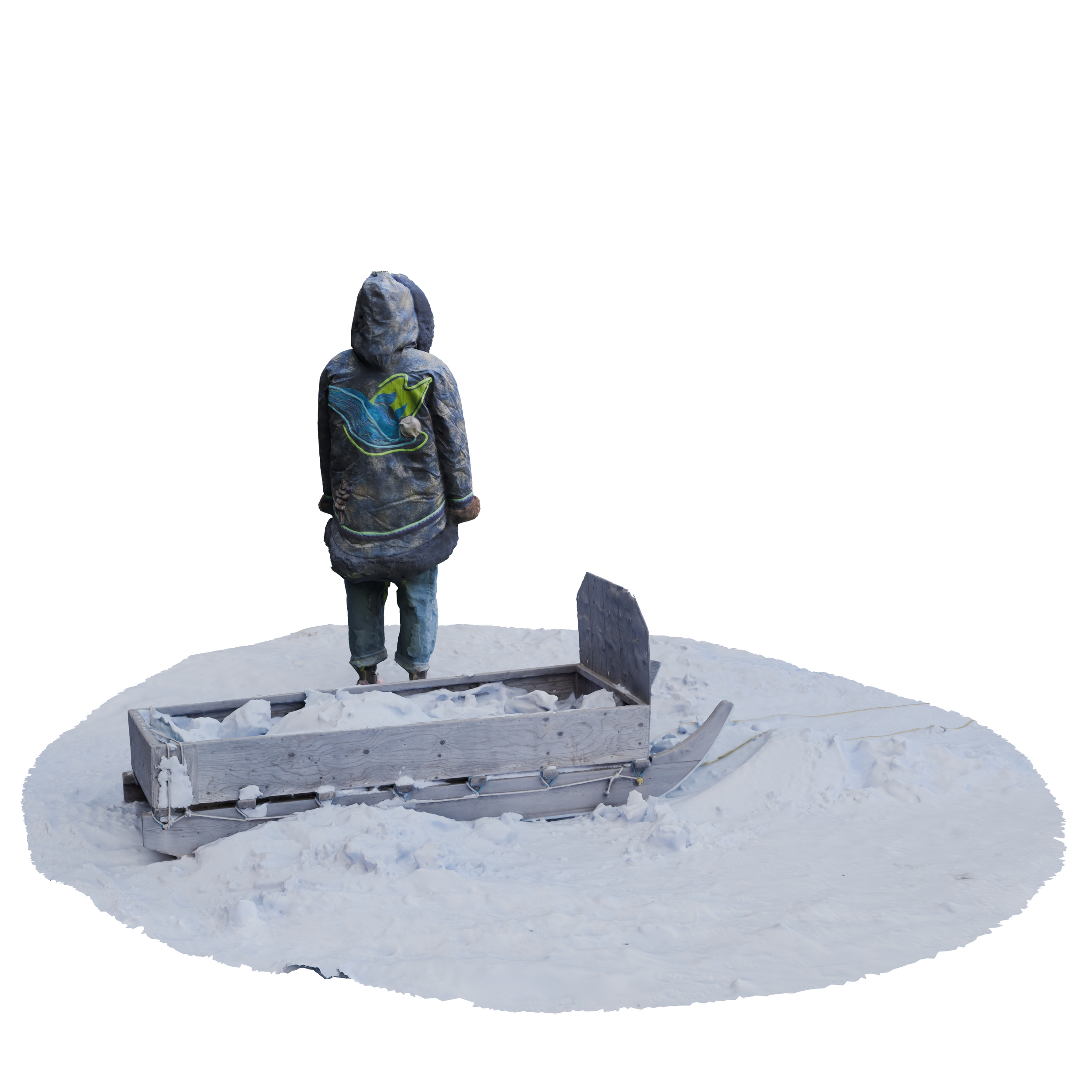
Julia Rensberg, I´m vytnesjäjja and artist from the southern part of Sápmi, currently living outside Jokkmokk where I have my workshop. I primarily works with traditional duodji in wood and antler, while also creating larger-scale art works. Both my life and practice are closely connected to reindeer and reindeer herding. My work reflects on what it means to live in relationship with land and asks how we can protect and care for it. Just as land care for us.
-
Taalrumiq is an Inuvialuk fashion designer, artist and content creator from Tuktuuyaqtyuuq, Inuvialuit Settlement Region. Raised on the shores of the arctic ocean with her Inuvialuit family and community, she was named at birth according to Inuvialuit custom, after her great-grandmother Taalrumiq.
She graduated from the University of Alberta with a Bachelor of Science and Bachelor of Education degrees, and is currently a 2nd year graduate student in the Master of Fine Art low residency program at Emily Carr University of Art + Design, where she is researching and creating a body of work based on ancestral Inuvialuit Fashion.
Notably her work appears in Netflix’s Avatar: The Last Airbender, she was a featured Designer on 7TH GEN and Project Runway Canada 2025.

-
Guná is of Dakhká Tlingit/Tagish Khwáan ancestry from the Dahk’laweidi Clan. She honors her ancestral Tlingit art form while merging formline into a bold contemporary vision. Trained by masters such as William Wasden and Mike Dangeli, and educated at Emily Carr University of Art and Design, she channels her culture into art that challenges and confronts, shaping her unique approach to visual storytelling. Her work, which has been recognized with awards like the William and Meredith Sanderson Prize for Emerging Canadian Artists, and longlisted for the Yukon Art Prize and national Sobey Award, has been exhibited in galleries across Canada. Guná has shared her knowledge through lectures and workshops at institutions such as Princeton, Emily Carr, and Stellenbosch, where she explores themes of cultural theft, decolonization, and healing. For Guná, art is activism—a call to respect, protect, and empower. She is committed to utilizing her art as a powerful voice for Tlingit sovereignty, thereby inviting audiences to honor Indigenous resilience.
-
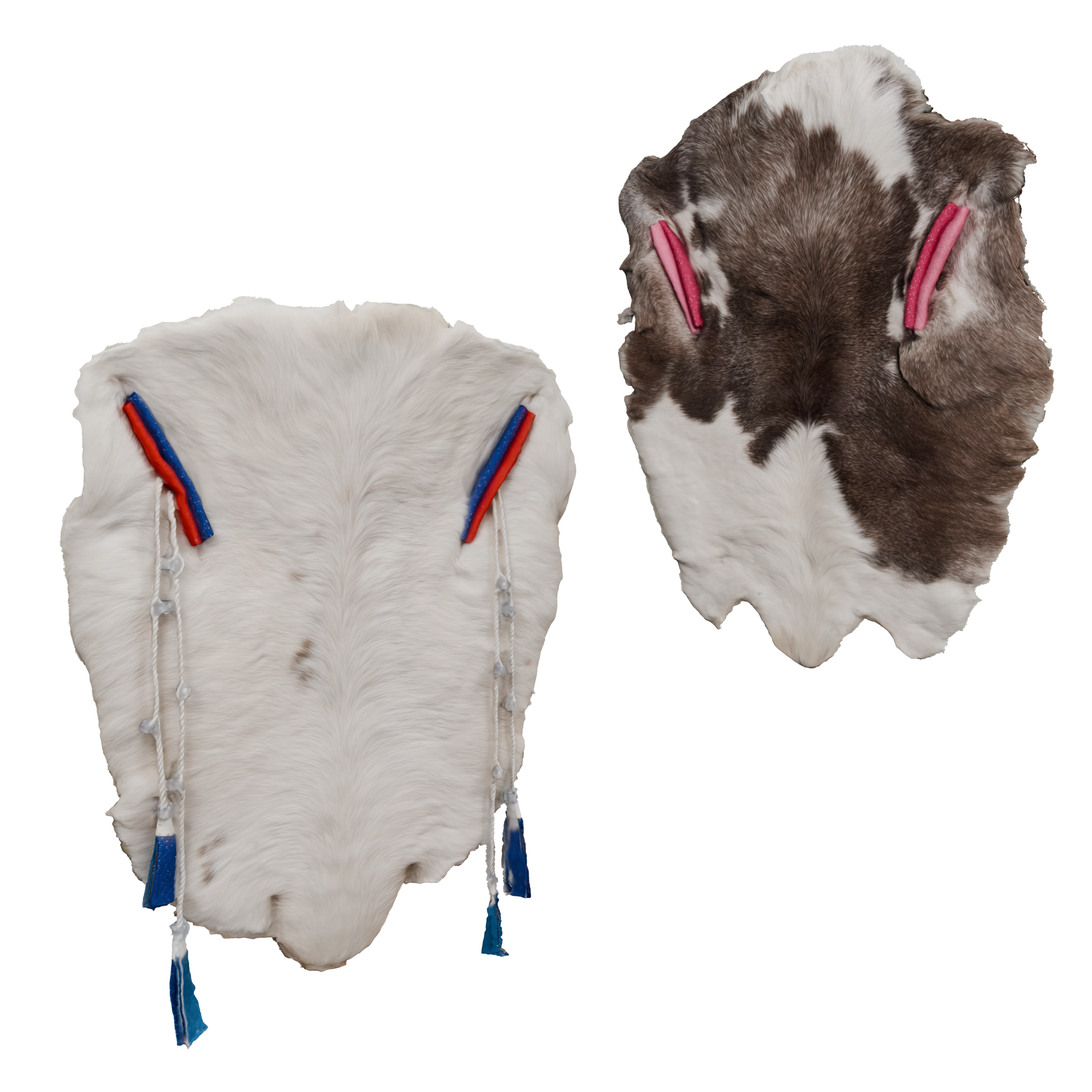
Tilde-Ristin Kuoljok (b. 1996) lives and works in Burgávrre, Jåhkåmåhkke, Sábme (Purkijaur, Jokkmokk, Sweden). She belongs to the reindeer herding community of Sirges and comes from a line of Sámi duodje practitioners. Kuoljok grew up learning traditional knowledge and handicraft practices within her family before pursuing formal studies. She is a Lule Sámi duodjár (traditional Sámi handicrafter), textile artist and trained conservator, educated at Sámij Åhpadusguovdásj in Jåhkåmåhkke and at the University of Gothenburg.
Kuoljok’s practice is grounded in traditional Lule Sámi duodje, working primarily with textiles, fur and leather - most often sourced from the reindeer. Through her work she investigates materiality, form and process, extending ancestral knowledge systems into contemporary textile art. Her practice moves between tradition and experimentation, exploring duodje as both cultural continuity and contemporary artistic expression, and as a method for engaging with past, present and future.
Her work has been exhibited internationally, including at KIN Museum for Contemporary Art, Oulu Art Museum, Rovaniemi Art Museum and Sven-Harrys Konstmuseum, among others. In addition to her textile practice, Kuoljok has designed and produced stage costumes for Aira Dance Company.
She has been awarded several grants and residencies, including the Region Västernorrland Sámi Artist Residency (2025) and Sápmi Art (2022).