
The Love That Carries Us: Empowerment Through the REDress / Orange Shirt Movements
weden.##
September 28th - October 2nd 2026
The Audain Gallery, UVic
The Love That Carries Us is curated by Chris M, a Denesųłiné and Scottish curator and artist, as part of their Graduate Research, on Indigenous Curation and visual resistance, at the University of Victoria. With the support and guidance of their supervisory committee: Dr. Heather Igloliorte. Carev Newman - Nulis (Havalthkin'geme), and Dr. Sm Łoodm 'Nüüsm (Mique'l Dangeli).
In the exhibition, Indigenous Artists: Taalrumiq, Collin Smith, Irene Adams, Nadya Kwandibens, Mike Dangeli, and Bada Jean explore the multitudes of care, love and labour that these movements embody through the lens of home.
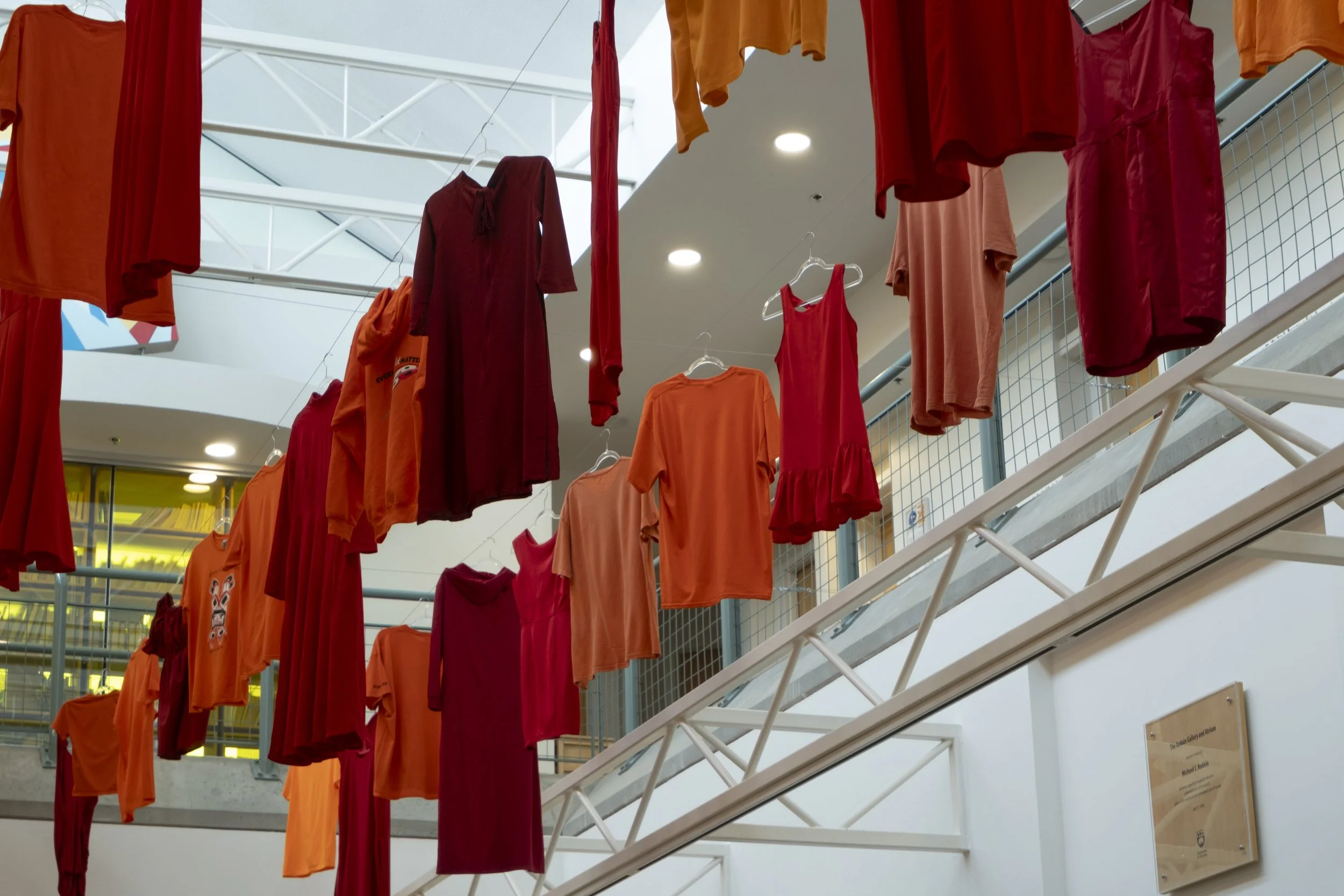
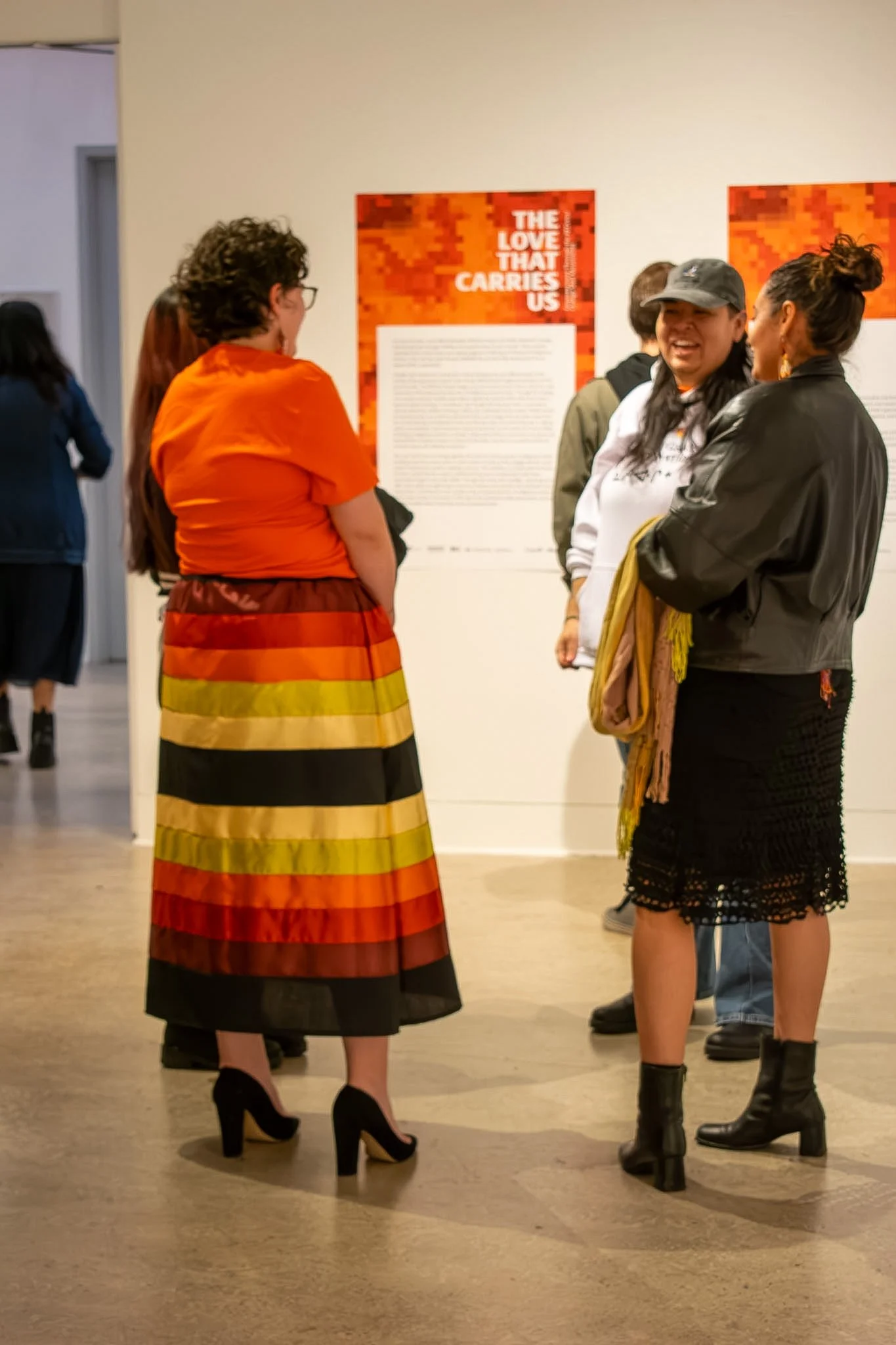
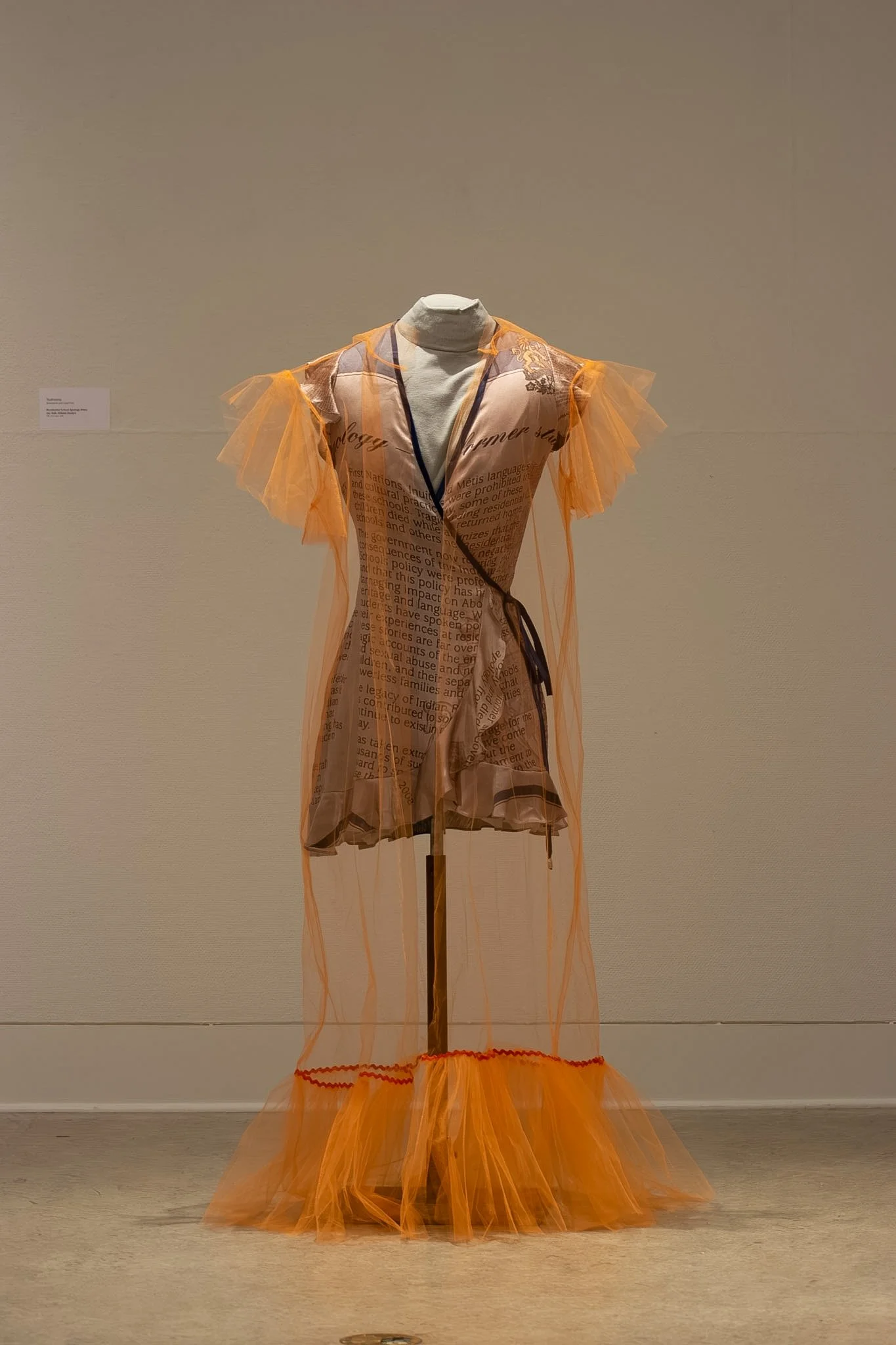
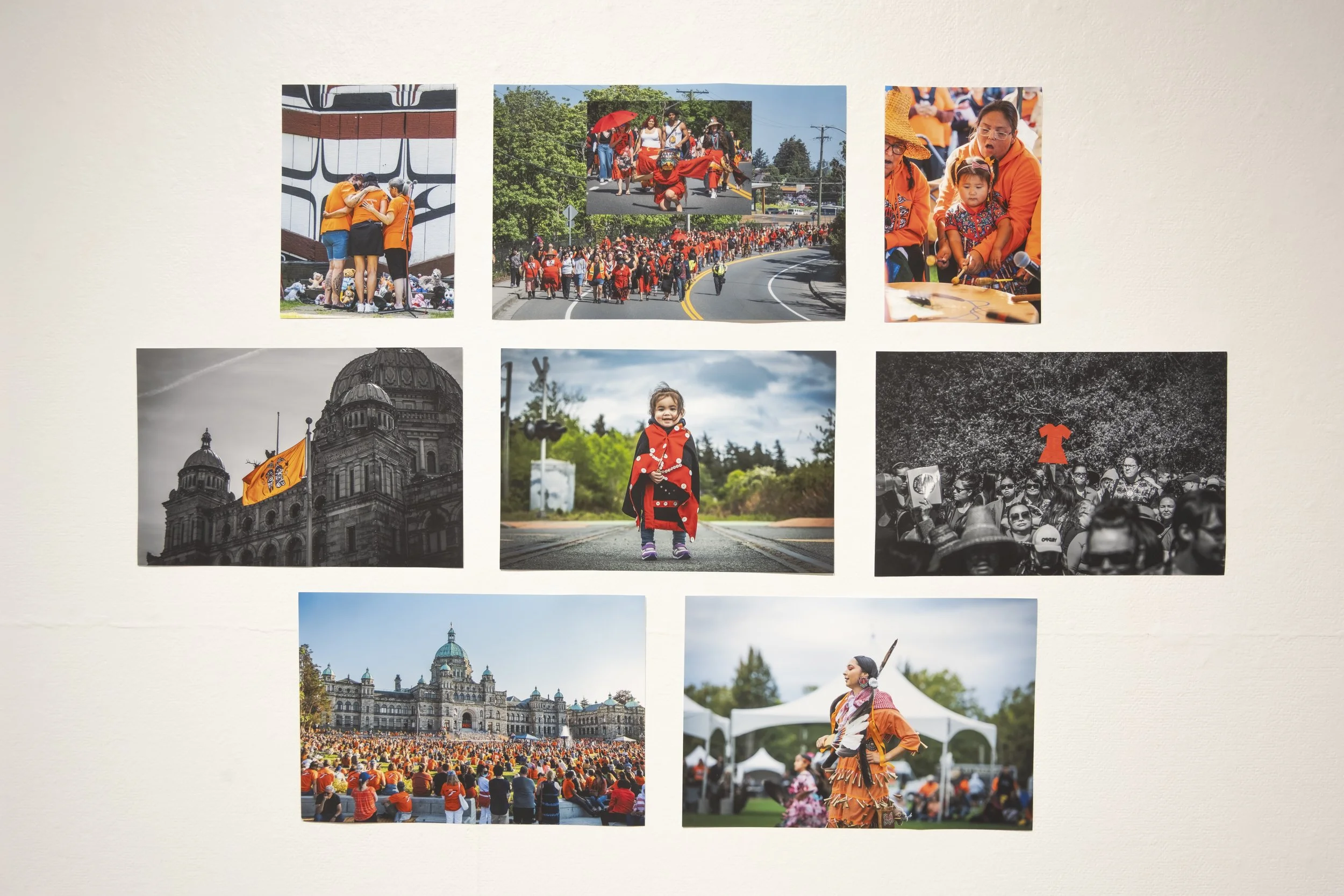
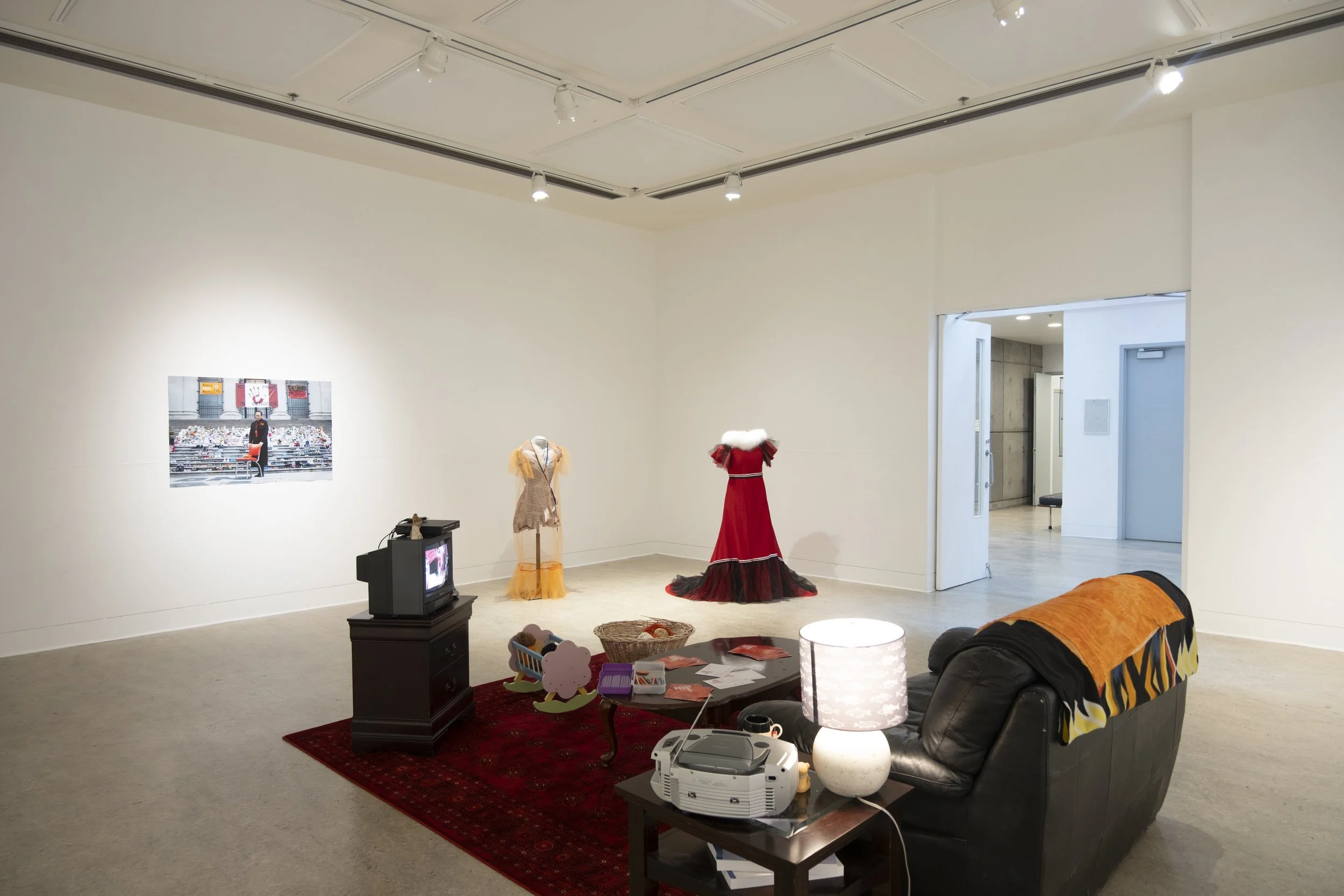
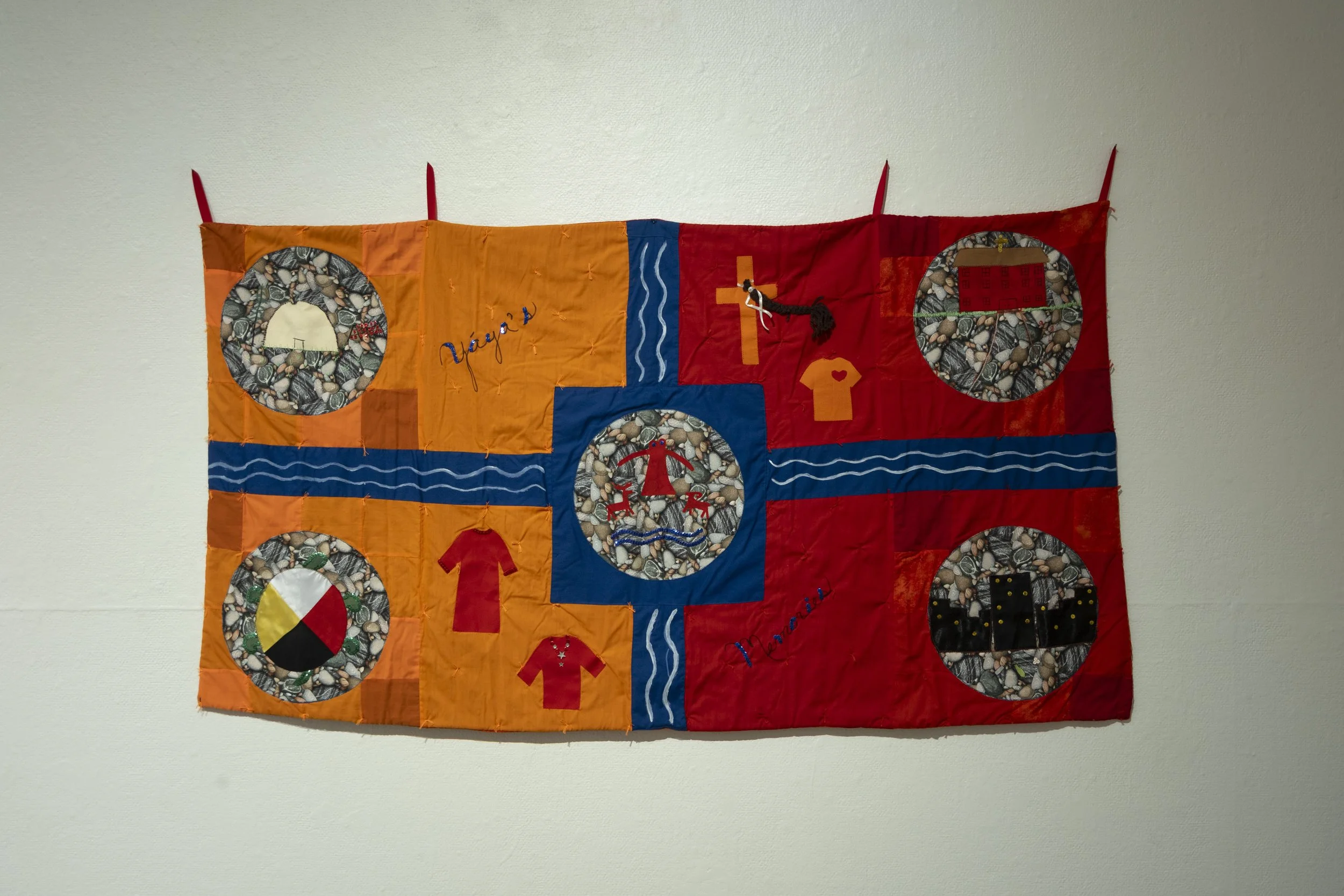
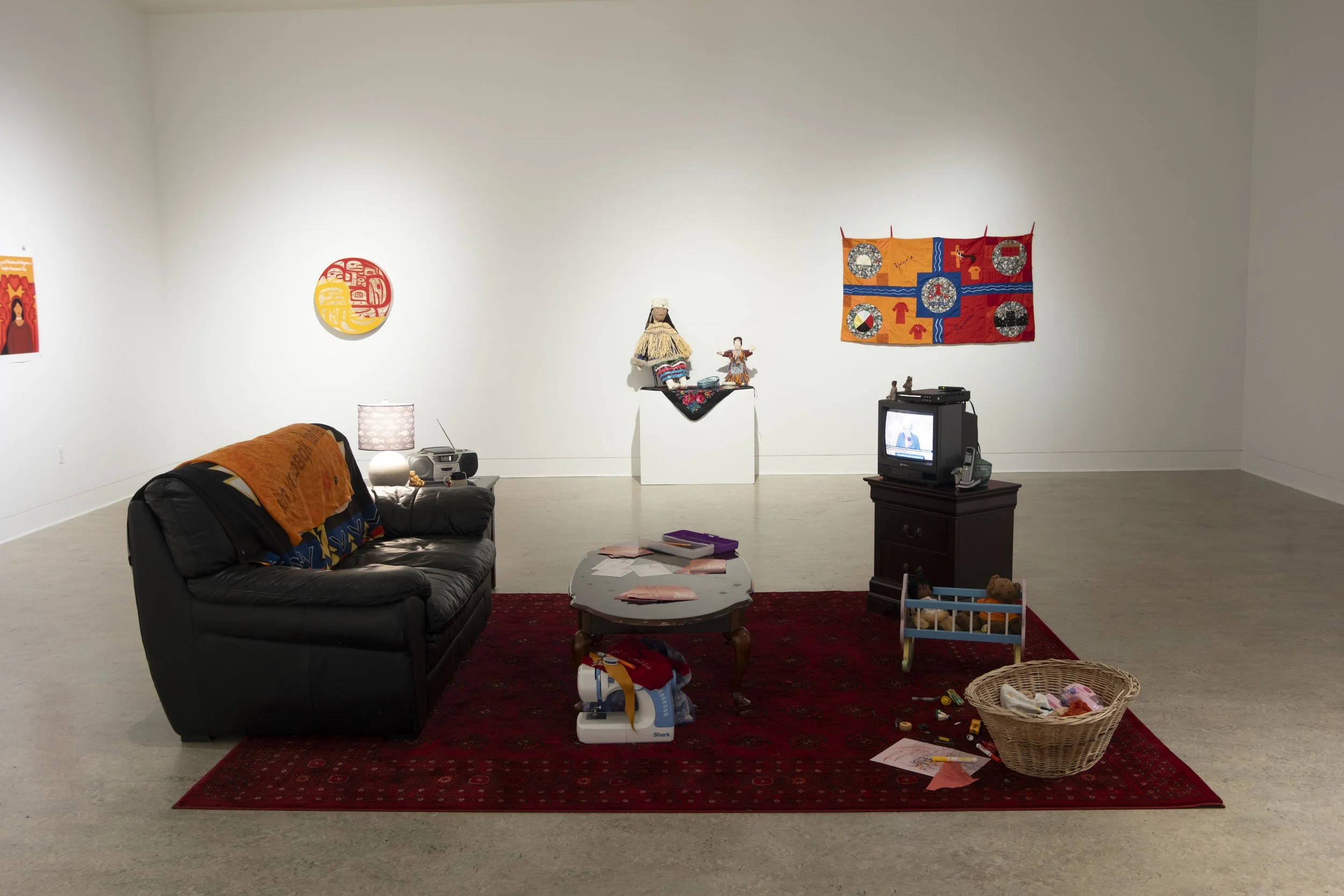
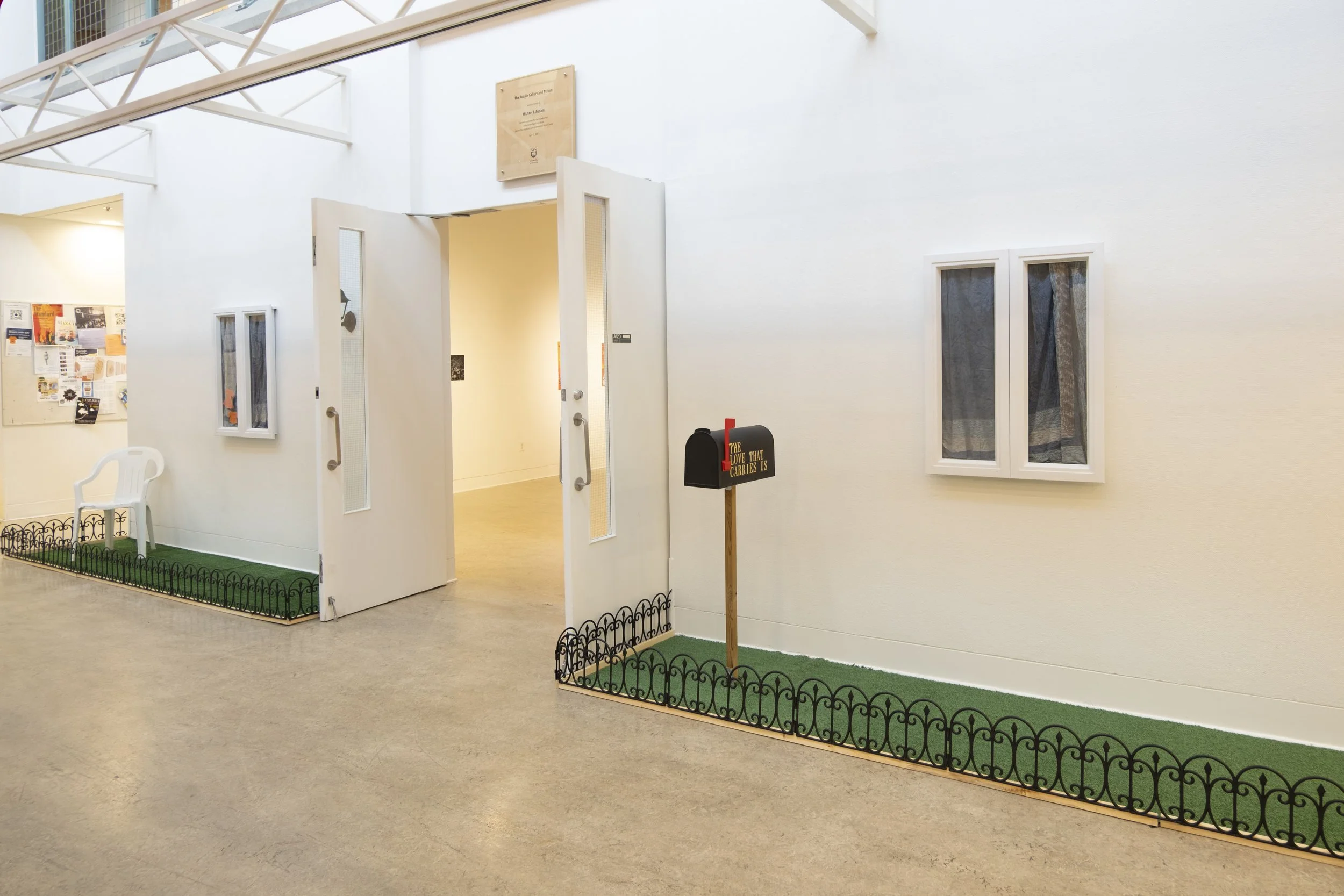
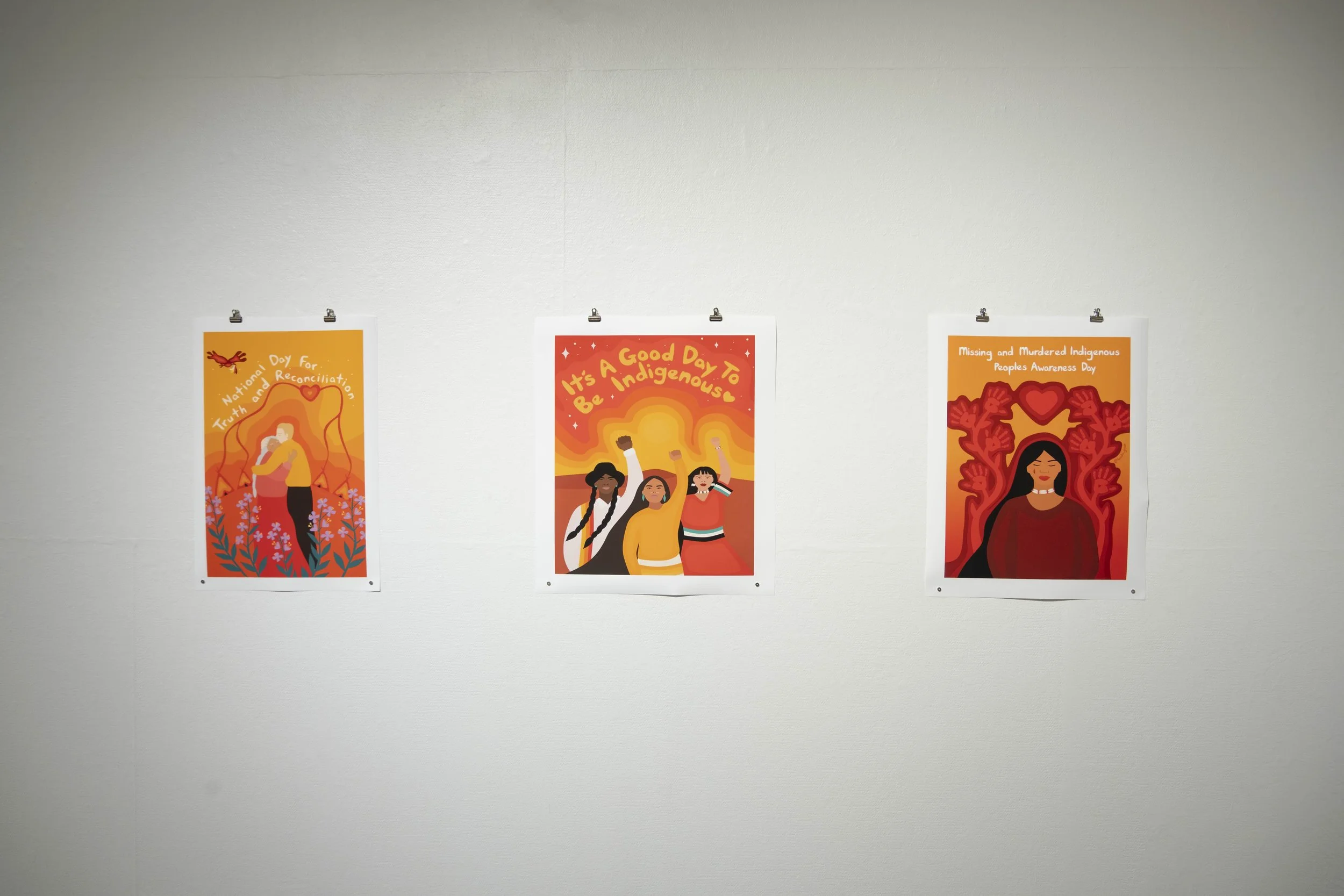
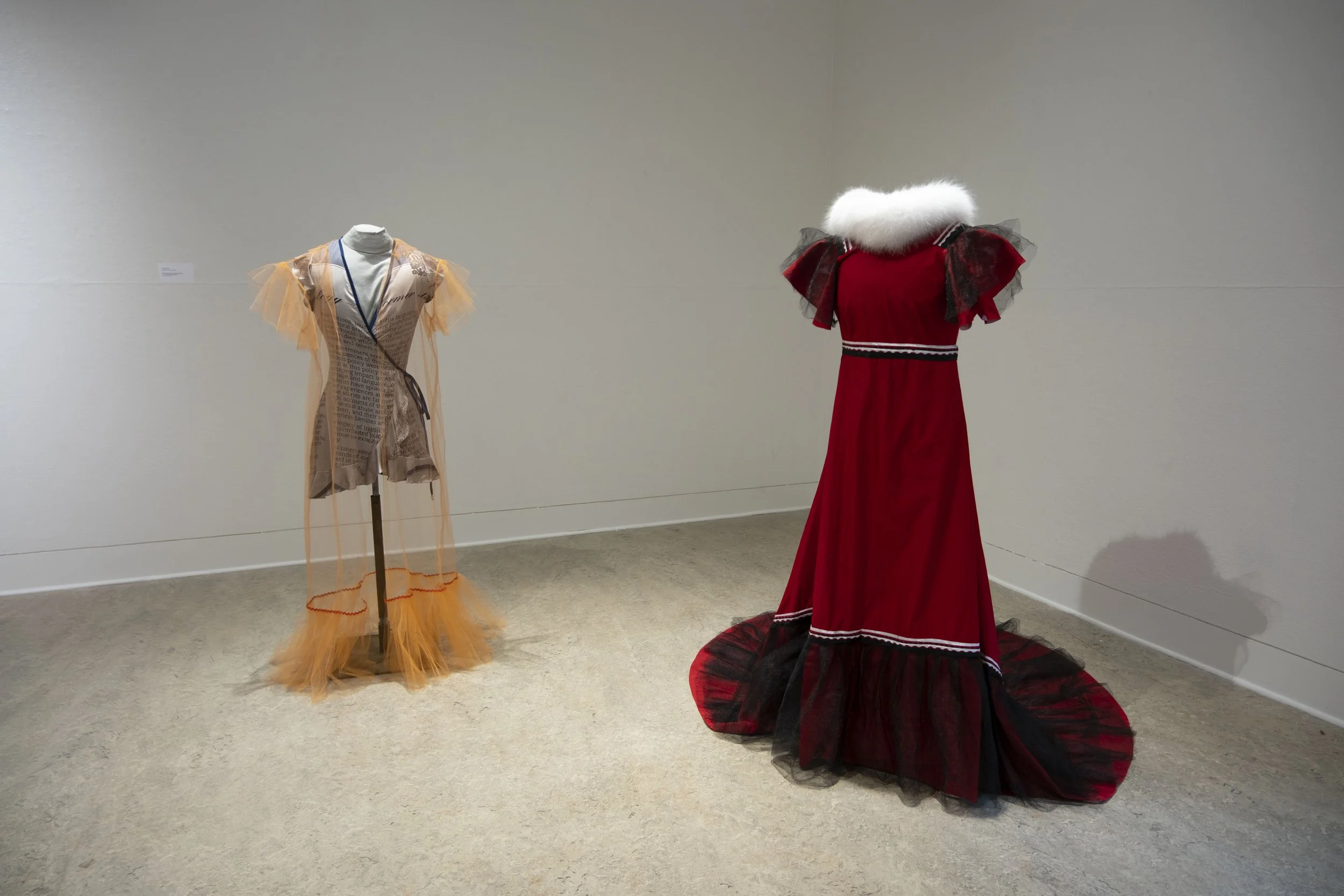
Image credits: Sanikka Gupta and Alex Silvey
Curatorial statement
For over ten years, Jaime Black-Morsette's REDress Project and Phyllis Webstad's Orange shirt society have brought visibility and inspired action across Canada. These projects represent both current issues and ongoing legacies of Missing and Murdered Indigenous Women, Girls, and Two-Spirit Peoples (MMIWG2S) and the Indian Residential School system (IRSS), respectively.
Despite each movement coming from unique backgrounds and different parts of the country, these grassroots projects have deeply affected both Indigenous and the general public. The REDress Project began as an art movement born from a desire to raise awareness of the disproportionate loss of Indigenous women's lives. Through the hanging of an empty red dress, families were able to signify the absence left in their lives when a loved one goes missing or is murdered. The Orange Shirt was born from a necessity to educate about the realities of being a child in the residential school system. Phyllis shared her personal story: as a child her prized and shiny new orange shirt was taken away from her on the first day of residential school, and decades later, this symbol became a rallying call for reconciliation. Each movement was born from the need to share the lived realities of being an Indigenous person in Canada. Today, both of these movements have grown far beyond their inception not just as means of education, but also as accepted symbols of memory, hope, and collective resistance.
The Love That Carries Us brings together the work of a diverse group of Indigenous artists working across the country and in a wide variety of media as they engage with the visual codes of adornment, protest, solidarity, and love. The exhibition is curated with the theme of home, inspired by the curator's childhood living room situated when both these movements began in the early 2000's. Through this centre, the nostalgic, cozy living room offers both safety; strengthening connections between the symbols and individuals lived experiences. Orienting the home speaks to the everyday practices of Indigenous activism at the heart of both movements. In this way, home represents safety, generations, stories, and the invisible labour that keeps these movements alive.
This exhibition would not have been possible without the support of the Social Sciences and Humanities Research Council, Taqsiqtuut Indigenous Research-Creation lab, Thinking Through the Museum, Curatorial Dreaming, the University of Victoria, the Department of Visual Arts, the Department of Art History and Visual Studies.
Special thanks to Dr. Heather Igloliorte, Carey Newman - Nulis (Hayalthkin’geme), Dr. Sm Łoodm 'Nüüsm (Mique'l Dangeli), Carly Greene, Hollis Roberts, Natalie Rollins, Laura Hodgins, Matt Brulotte, Satya Underhill Garcia, Seven Ellis Embury, Michaela Gilbert, Graeme Parker, Megan Dickie, Rick Leong, Beth Stuart, Jesse Campbell, Katie Manomie, Nadine Spence, Lorilee Wastasecoot, Heather Dean, Alexandra Silvey, Kirk Mockford, Jennifer Andrew, Evelyn Andrew, George Andrew, Sanikka Gupta, Lauren McKinnon, Mishelle Lavoie, Kirk McNally, Lalita Kines, Shelley Ruth Butler, Anu Henderson, Janine O'Neill, Danny Madani. And UVIC Campus Security. With their kindness, support, and expertise, this exhibition was possible.
We acknowledge and respect the Ləkʷəŋən (Songhees and Xʷsepsəm/Esquimalt) Peoples on whose territory the university stands, and the Ləkʷəŋən and WSÁNEĆ Peoples whose historical relationships with the land continue to this day.